Introduction to Machine Learning: Key Concepts Explained

Micro Tutorial: Machine Learning

Micro Tutorial: Machine Learning

Practical Introduction

Have you ever noticed how your smartphone suggests the next word while you’re typing? This small convenience is just one example of machine learning in action. Imagine the complexity behind this technology, which processes vast amounts of data to predict your needs. Today, we’ll delve into machine learning and discover how it shapes our world, enhancing various aspects of our daily lives and driving innovation across industries.

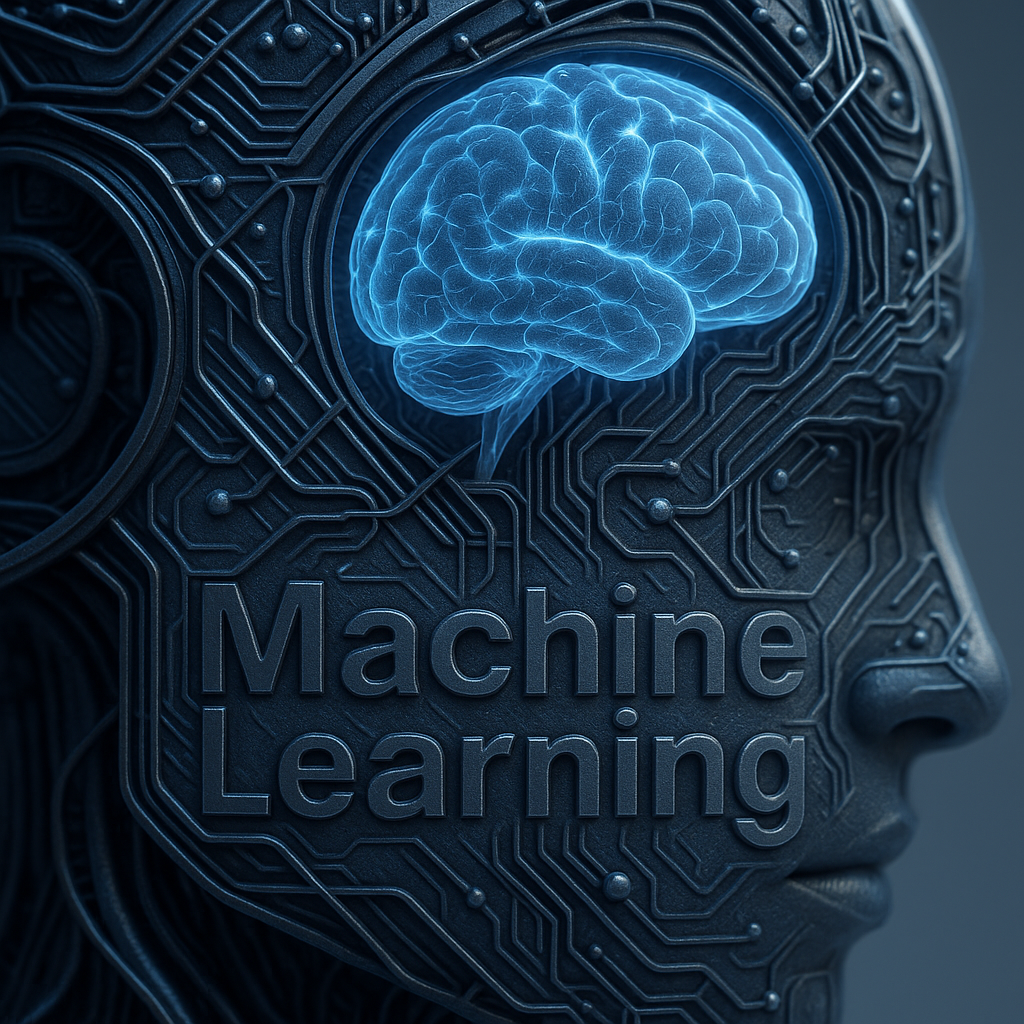
Machine learning (ML) is not merely a buzzword; it is a transformative technology that enables computers to learn from and make predictions based on data. By leveraging algorithms and statistical models, machine learning systems can analyze patterns, make decisions, and improve over time without explicit programming for each task. This tutorial aims to provide a comprehensive overview of machine learning, covering its fundamentals, functionality, applications, common pitfalls, and a detailed practical use case.

Fundamentals

At its core, machine learning is a subset of artificial intelligence (AI) that focuses on the development of algorithms that allow computers to learn from and make predictions based on data. The fundamental premise of machine learning is that systems can automatically learn and improve from experience without being explicitly programmed.

Key Concepts

  1. Data: The foundation of machine learning is data. It can be structured (like databases) or unstructured (like images or text). The quality and quantity of data play a crucial role in the performance of machine learning models.
  2. Features and Labels: In supervised learning, data is typically organized into features (input variables) and labels (output variables). Features are the attributes used to make predictions, while labels are the outcomes we want to predict.
  3. Training and Testing Sets: A common practice in machine learning is to split the dataset into two parts: a training set and a testing set. The training set is used to train the model, while the testing set evaluates its performance on unseen data.
  4. Model: A machine learning model is a mathematical representation of a process that maps input features to output labels. The model is trained using the training data, allowing it to learn patterns and relationships.
  5. Evaluation Metrics: After training a model, it is essential to evaluate its performance using various metrics. Common metrics include accuracy, precision, recall, and F1 score, which provide insights into how well the model performs.

How It Works

Machine learning works through a process of training and inference. Here’s a step-by-step breakdown of how it typically operates:

  1. Data Collection: The first step involves gathering relevant data. This can be from various sources, including databases, online repositories, or real-time sensors.
  2. Data Preprocessing: Before training a model, the data must be cleaned and prepared. This involves handling missing values, normalizing features, and encoding categorical variables to ensure that the data is suitable for analysis.
  3. Model Selection: Depending on the problem at hand, you will choose an appropriate machine learning algorithm. This could be a supervised learning algorithm (like linear regression or decision trees), unsupervised learning algorithm (like K-means clustering), or reinforcement learning algorithm.
  4. Training the Model: During this phase, the model is trained using the training dataset. The algorithm iteratively adjusts its parameters to minimize prediction errors. For example, if you’re predicting house prices, the model learns how different features (like location, size, and condition) affect the price.
  5. Testing the Model: Once trained, the model is evaluated using the testing dataset. This helps assess how well the model generalizes to new, unseen data.
  6. Model Optimization: Based on the evaluation metrics, you may need to optimize the model. This can involve tuning hyperparameters, selecting different features, or even trying out different algorithms.
  7. Deployment: After achieving satisfactory performance, the model can be deployed in a real-world application, where it can make predictions based on new incoming data.

Types of Machine Learning

Machine learning can be categorized into three main types:

  • Supervised Learning: In supervised learning, the model is trained on labeled data. The algorithm learns to map inputs to outputs based on the examples provided. Common algorithms include linear regression, logistic regression, decision trees, and support vector machines.
  • Unsupervised Learning: In this approach, the model works with unlabeled data. It tries to find hidden patterns or groupings within the data. Clustering algorithms like K-means and hierarchical clustering are examples of unsupervised learning.
  • Reinforcement Learning: This type involves training agents to make decisions through trial and error. The agent receives rewards or penalties based on its actions, optimizing its strategy over time. Applications include game playing, robotics, and autonomous systems.

Applications

The applications of machine learning are vast and varied, spanning numerous industries. Here are some of the most impactful areas:

  1. Healthcare: Machine learning algorithms analyze patient data to predict diseases, personalize treatment plans, and assist in surgeries through robotic systems. Predictive models can identify patients at risk of developing chronic conditions, enabling early interventions.
  2. Finance: In the finance sector, machine learning is widely used for fraud detection, risk assessment, and algorithmic trading. By analyzing transaction patterns, systems can flag unusual behavior, helping to prevent fraud before it occurs.
  3. Retail: Retailers utilize machine learning for inventory management, personalized marketing, and customer relationship management. By analyzing customer behavior, these systems can recommend products that align with individual preferences, thus enhancing the shopping experience.
  4. Transportation: Machine learning plays a critical role in autonomous vehicles. These systems process data from cameras and sensors to make real-time driving decisions, improving safety and efficiency.
  5. Natural Language Processing (NLP): NLP, a subset of machine learning, enables machines to understand and respond to human language. Applications include chatbots, translation services, and voice recognition software, facilitating smoother human-computer interactions.
  6. Manufacturing: In manufacturing, machine learning can optimize supply chain management, predict equipment failures, and enhance quality control processes. Predictive maintenance algorithms can foresee when machinery is likely to fail, allowing for timely repairs.
  7. Marketing: Machine learning is used to analyze consumer behavior and preferences, enabling targeted advertising and personalized marketing strategies. By segmenting customers based on their behaviors, businesses can create tailored campaigns that resonate with specific audiences.

Good Practices and Limitations

While machine learning offers powerful capabilities, it is essential to be aware of best practices and limitations:

Good Practices

  • Data Quality: Always ensure that your dataset is clean, representative, and relevant to the problem you’re solving. Poor data quality can lead to inaccurate predictions.
  • Feature Selection: Choose relevant features that contribute to model performance. Irrelevant features can introduce noise and degrade model accuracy.
  • Model Validation: Use techniques like cross-validation to evaluate your model’s robustness. This helps ensure that the model performs well across different subsets of data.
  • Hyperparameter Tuning: Experiment with different hyperparameters to optimize model performance. Proper tuning can significantly improve accuracy and efficiency.
  • Ethical Considerations: Be aware of biases in your training data that may affect model predictions. Ensure that your model does not reinforce existing biases or discriminate against certain groups.

Limitations

  • Overfitting: A common pitfall in machine learning is overfitting, where the model learns the training data too well, including its noise, leading to poor generalization on unseen data.
  • Data Dependency: Machine learning models rely heavily on data. Insufficient or biased data can lead to inaccurate predictions and reinforce existing biases.
  • Interpretability: Some machine learning models, especially complex ones like deep learning, can be challenging to interpret. Understanding how a model arrives at a decision is crucial in sensitive applications like healthcare and finance.
  • Computational Resources: Training machine learning models can be resource-intensive, requiring significant computational power and time, especially for large datasets or complex algorithms.

Concrete Use Case

Let’s explore a concrete use case of machine learning in the healthcare industry, focusing on predicting diabetes risk. As diabetes becomes increasingly prevalent, predicting which individuals are at risk can lead to early interventions and better management of the condition.

Step 1: Data Collection

To begin, you’ll need to gather a dataset containing relevant patient information, including age, body mass index (BMI), glucose levels, and family history of diabetes. A well-known dataset for this purpose is the Pima Indians Diabetes Database, which includes diagnostic measurements for female patients.

Step 2: Data Preprocessing

Next, you will preprocess the data. This involves cleaning the dataset by handling missing values, normalizing the features, and encoding categorical variables. Normalization ensures that all features contribute equally to the model’s learning process. For instance, glucose levels and BMI may have vastly different scales, so scaling them to a standard range can improve model performance.

Step 3: Model Selection

Once your data is ready, you can select a machine learning algorithm. For this task, you might choose a supervised learning approach, such as logistic regression or decision trees. Logistic regression is a popular choice for binary classification problems, like predicting whether a patient has diabetes or not.

Step 4: Split the Dataset

You will then split your dataset into training and testing sets, typically using an 80/20 ratio. With the training set, you will fit the model, allowing it to learn from the data. During this phase, you can experiment with different hyperparameters (such as learning rate and regularization) to optimize your model.

Step 5: Model Evaluation

After training, you will evaluate the model’s performance using the testing set. Common metrics include accuracy, precision, recall, and F1 score. Accuracy indicates the proportion of correct predictions, while precision and recall provide insight into the model’s performance in identifying positive cases (diabetes). The F1 score is the harmonic mean of precision and recall, offering a balance between the two.

Suppose your model achieves an accuracy of 85%. This means it correctly predicts 85% of the testing set. However, you must also consider false positives and false negatives, as they can have significant implications in a healthcare context. A false negative (predicting no diabetes when the patient has it) can lead to missed treatment opportunities, while a false positive may unnecessarily alarm patients.

Step 6: Model Improvement

To improve your model further, you might consider using ensemble methods like Random Forest or Gradient Boosting. These methods combine multiple models to enhance predictive accuracy and robustness. Additionally, you can apply techniques like cross-validation to ensure that your model performs well across different subsets of data.

Step 7: Deployment

Once you have a reliable model, you can deploy it as part of a healthcare application or system. For instance, a mobile app could allow users to input their health data and receive a personalized risk assessment for diabetes. This approach empowers individuals to monitor their health proactively.

Moreover, as your model continues to receive new data, you can update it periodically to maintain accuracy. This practice, known as model retraining, ensures that the system adapts to changes in population health trends.

In summary, predicting diabetes risk using machine learning involves several steps: data collection, preprocessing, model selection, training, evaluation, and deployment. Each step requires careful consideration and expertise to develop an effective solution.

Common Mistakes and How to Avoid Them

  • Ignoring Data Quality: Always ensure that your dataset is clean and representative. Poor data quality can lead to inaccurate predictions.
  • Overfitting: Monitor your model’s performance on unseen data to avoid this common pitfall. Employ techniques like cross-validation to check for generalization.
  • Neglecting Feature Selection: Choose relevant features that contribute to model performance; irrelevant features can lead to noise. Conduct exploratory data analysis to identify important features.
  • Failing to Validate Your Model: Use techniques like cross-validation to evaluate your model’s robustness. This helps ensure that the model performs well across different subsets of data.
  • Skipping Hyperparameter Tuning: Experiment with different hyperparameters to optimize model performance. Proper tuning can significantly improve accuracy and efficiency.
  • Not Considering Ethical Implications: Be aware of biases in your training data that may affect model predictions. Ensure that your model does not reinforce existing biases or discriminate against certain groups.

Conclusion

In conclusion, machine learning is a powerful tool that enables systems to learn from data, making it applicable across various fields, from healthcare to finance. As you explore this technology further, take the time to understand its principles, key parameters, and potential pitfalls. By doing so, you can harness the power of machine learning responsibly and effectively.

Machine learning is not just a trend; it is the future of technology. As industries continue to adopt and integrate machine learning solutions, the demand for skilled professionals in this field is growing. Start experimenting with your own machine learning projects today, and discover the impact you can make!

For further exploration and resources, consider visiting prometeo.blog. Here, you will find a wealth of information on machine learning, AI, and related technologies that can help you deepen your understanding and enhance your skills.

Third-party readings

Find this product and/or books on this topic on Amazon

Go to Amazon

As an Amazon Associate, I earn from qualifying purchases. If you buy through this link, you help keep this project running.

Micro Tutorial: Machine Learning

Quick Quiz

Question 1: What is machine learning primarily focused on?


Question 2: What type of data can be used in machine learning?


Question 3: In supervised learning, what are features and labels?


Question 4: What is a crucial factor that affects the performance of machine learning models?


Question 5: What does machine learning enable computers to do?


Understanding Neural Networks: A Comprehensive Guide

Micro Tutorial: Red Neuronal

Comprehensive Tutorial: Neural Networks

Practical Introduction

Have you ever wondered how your smartphone recognizes your voice? A few years ago, I was amazed when my device understood my commands without needing to repeat them. This magic happens thanks to neural networks, a fascinating field in electronics and computer engineering. Neural networks are not just a technological marvel; they are also a cornerstone of artificial intelligence (AI) that drives many applications we encounter daily. From voice assistants to recommendation systems, neural networks play a crucial role in making technology more intuitive and responsive.

In this tutorial, we will delve deep into the world of neural networks, exploring their fundamentals, mechanisms, applications, best practices, and limitations. By the end, you will have a comprehensive understanding of how neural networks work and how you can leverage them in your projects.

Fundamentals of Neural Networks

Neural networks are computational models inspired by the human brain’s structure and function. They consist of interconnected groups of artificial neurons that process information in a way similar to biological neural networks. The primary goal of a neural network is to recognize patterns in data, enabling it to perform tasks like classification, regression, and clustering.

Structure of Neural Networks

A neural network is typically organized into layers:
1. Input Layer: This layer receives the raw data, such as images, text, or sound. Each neuron in this layer corresponds to a feature of the input data. For instance, in an image recognition task, each neuron might represent a pixel or a color.

  1. Hidden Layers: These layers perform computations and transformations on the data. The number of hidden layers can vary depending on the complexity of the task. Generally, deeper networks (those with more hidden layers) can capture more intricate patterns in the data. Each neuron in a hidden layer applies a mathematical function, often called an activation function, to the weighted sum of its inputs. This function introduces non-linearity to the model, allowing it to learn complex relationships.

  2. Output Layer: This is where the final decision is made. Depending on the application, the output layer could provide classifications (e.g., identifying an object in a picture) or predictions (e.g., forecasting stock prices). Each neuron in this layer corresponds to an output class or value.

How Neural Networks Work

At its core, a neural network takes input data, processes it through multiple layers of neurons, and produces an output. The learning process involves adjusting the weights of the connections between neurons based on the input data and the expected output. The most common method for training neural networks is backpropagation, which calculates the error of the network’s predictions and updates the weights to minimize this error.

Training the Neural Network

To use a neural network effectively, you need to train it. Training involves several key steps:

  1. Data Preparation: Start with a dataset that includes inputs and the corresponding correct outputs. For example, if you are training a network to recognize cats in images, your dataset would include many images labeled as either “cat” or “not cat.”

  2. Forward Propagation: When you input data into the network, it passes through the layers, and each neuron processes the data according to its activation function. The output of the network is generated.

  3. Loss Calculation: After generating an output, the network calculates the loss, which represents the difference between the predicted output and the actual output. Common loss functions include Mean Squared Error for regression tasks and Cross-Entropy Loss for classification tasks.

  4. Backpropagation: The network uses backpropagation to update the weights based on the calculated loss. This involves calculating the gradient of the loss concerning each weight and adjusting the weights in the opposite direction of the gradient to minimize the loss.

  5. Iteration: The process is repeated for many epochs (iterations over the entire dataset) until the model’s performance stabilizes or improves.

Applications of Neural Networks

Neural networks have a vast array of applications across different fields. Here are some common areas where they are utilized:

  • Image Recognition: Neural networks can identify and classify objects in images, making them essential in fields like autonomous driving and security. Convolutional Neural Networks (CNNs) are particularly effective for image-related tasks due to their ability to capture spatial hierarchies.

  • Natural Language Processing (NLP): They enable machines to understand and generate human language, powering applications like chatbots, language translation services, and sentiment analysis. Recurrent Neural Networks (RNNs) and Transformers are popular architectures in NLP.

  • Medical Diagnosis: Neural networks assist in analyzing medical data to help diagnose diseases by recognizing patterns in patient data. They can analyze medical images, such as X-rays or MRIs, with remarkable accuracy.

  • Finance: They are used to predict stock prices and assess risk by analyzing historical financial data. Neural networks can identify complex patterns in time-series data that traditional models might miss.

  • Gaming: Neural networks are used in game development for creating intelligent agents that can learn and adapt to player behavior, enhancing the gaming experience.

Challenges and Limitations

Despite their power, neural networks also face challenges. Here are some of the main limitations:

  1. Data Requirements: Training a neural network requires a significant amount of data. Insufficient data can lead to poor model performance and overfitting.

  2. Computational Resources: Training deep networks can be computationally intensive, requiring specialized hardware like GPUs or TPUs to speed up the process.

  3. Overfitting: Overfitting can occur when a model learns to perform exceptionally well on training data but fails to generalize to new, unseen data. Techniques like regularization, dropout, and early stopping are often employed to mitigate these issues.

  4. Interpretability: Neural networks are often considered «black boxes,» making it challenging to interpret their decisions. This lack of transparency can be a significant concern in critical applications like healthcare and finance.

  5. Hyperparameter Tuning: Neural networks have many hyperparameters (e.g., learning rate, batch size) that need to be tuned for optimal performance. Finding the right combination can be time-consuming and requires experimentation.

Concrete Use Case: Image Classification

Let’s explore a concrete use case: image classification using a neural network. Imagine you want to build a system that can classify images of animals into categories such as dogs, cats, and birds. Here’s how you would approach the problem:

Step 1: Data Collection

First, gather a dataset containing thousands of labeled images of animals. You might use publicly available datasets like CIFAR-10 or create your own by scraping images from the web. Ensure that your dataset is balanced, meaning you have a similar number of images for each category.

Step 2: Data Preprocessing

Next, preprocess the images. This could involve resizing them to a uniform size, normalizing pixel values, and augmenting the dataset through techniques like rotation or flipping. Data augmentation helps improve the model’s robustness by providing more varied examples for training.

Step 3: Designing the Neural Network

Now, design your neural network architecture. You might start with a simple architecture consisting of:
– An input layer that matches the size of your preprocessed images.
– A few hidden layers with a decreasing number of neurons to capture features at different levels of abstraction.
– An output layer with three neurons (one for each animal category) using a softmax activation function to provide probabilities for each class.

Step 4: Training the Model

After defining your architecture, compile the model by selecting a loss function (e.g., categorical cross-entropy) and an optimizer (e.g., Adam). Then, train the model using your training dataset while monitoring its performance on a validation set. You’ll want to keep track of metrics such as accuracy and loss to ensure the model is learning effectively.

Step 5: Evaluating the Model

Once training is complete, evaluate the model using a separate test dataset. This step is crucial to determine how well your model generalizes to new data. Analyze the results and identify any areas where the model struggles. You might find that certain categories are more challenging to classify than others.

Step 6: Fine-Tuning

If your model doesn’t perform as expected, consider fine-tuning the architecture or parameters. You might add more hidden layers, adjust the learning rate, or apply regularization techniques to improve generalization. Additionally, you may want to experiment with different architectures, such as convolutional neural networks (CNNs), which are particularly effective for image classification tasks.

Step 7: Deployment

Finally, once you’re satisfied with the model’s performance, it’s time to deploy it. You could create a web application or a mobile app that allows users to upload images and receive predictions about the animal category. Ensure that the deployment environment is equipped with the necessary resources to run the model efficiently.

In this example, we’ve walked through the entire process of building an image classification system using neural networks. Through careful data collection, preprocessing, model design, training, evaluation, and deployment, you can create a functional and effective application.

Common Mistakes and How to Avoid Them

When working with neural networks, it’s easy to make mistakes, especially if you’re new to the field. Here are some common pitfalls and tips on how to avoid them:

  • Not Preprocessing Data: Always preprocess your data. Raw data often contains noise and inconsistencies that can hinder model performance. Normalize your data and ensure it is in a suitable format for training.

  • Overfitting: Be cautious of overfitting. Use techniques like dropout and regularization to ensure your model generalizes well to unseen data. Monitor validation loss during training to detect overfitting early.

  • Ignoring Validation Sets: Always set aside a validation dataset. This will help you monitor your model’s performance during training and prevent overfitting. Use this set to tune hyperparameters.

  • Choosing the Wrong Architecture: Don’t pick a model architecture arbitrarily. Base your choice on the nature of the task and the complexity of the data. Research existing architectures that have been successful for similar tasks.

  • Neglecting Hyperparameter Tuning: Hyperparameters can significantly impact a model’s performance. Spend time experimenting with different values to find the optimal configuration. Use techniques like grid search or random search for systematic tuning.

  • Not Evaluating Properly: Ensure that you evaluate your model thoroughly using a test dataset. Relying solely on training accuracy can lead to a false sense of confidence. Use metrics appropriate for your task, such as precision, recall, or F1 score.

By being aware of these common mistakes and following best practices, you’ll be better equipped to work with neural networks effectively.

Conclusion

In this tutorial, we’ve explored the fundamentals of neural networks, including their workings, applications, and a practical use case. You now have a foundational understanding of how neural networks operate and how you can apply them to solve real-world problems. Neural networks are powerful tools that can transform data into actionable insights, and with the right approach, you can harness their capabilities for your projects.

As you continue your journey in this exciting field, consider experimenting with your own neural network projects. Embrace the opportunity to learn and innovate, and stay updated with the latest advancements in neural network research and applications. The future of AI is bright, and neural networks are at the forefront of this revolution.

For more information and resources, visit prometeo.blog. Happy learning!

Quick Quiz

Question 1: What is the primary goal of a neural network?


Question 2: Which layer of a neural network receives the raw data?


Question 3: What do hidden layers in a neural network do?


Question 4: Neural networks are inspired by which biological structure?


Question 5: Which of the following is NOT an application of neural networks?


Third-party readings

Find this product on Amazon

Go to Amazon

As an Amazon Associate, I earn from qualifying purchases. If you buy through this link, you help keep this project running.

Micro Tutorial: Red Neuronal


Explore with UGV Beast: ROS 2 & Jetson Orin Robot

Micro Tutorial: UGV Beast ROS 2 con Jetson Orin

Practical Introduction

Imagine you’re exploring an uncharted terrain, and your trusty companion is a robot capable of navigating through challenging landscapes. Meet the UGV Beast ROS 2 con Jetson Orin, your new partner in off-road adventures.

What it’s used for and how it works

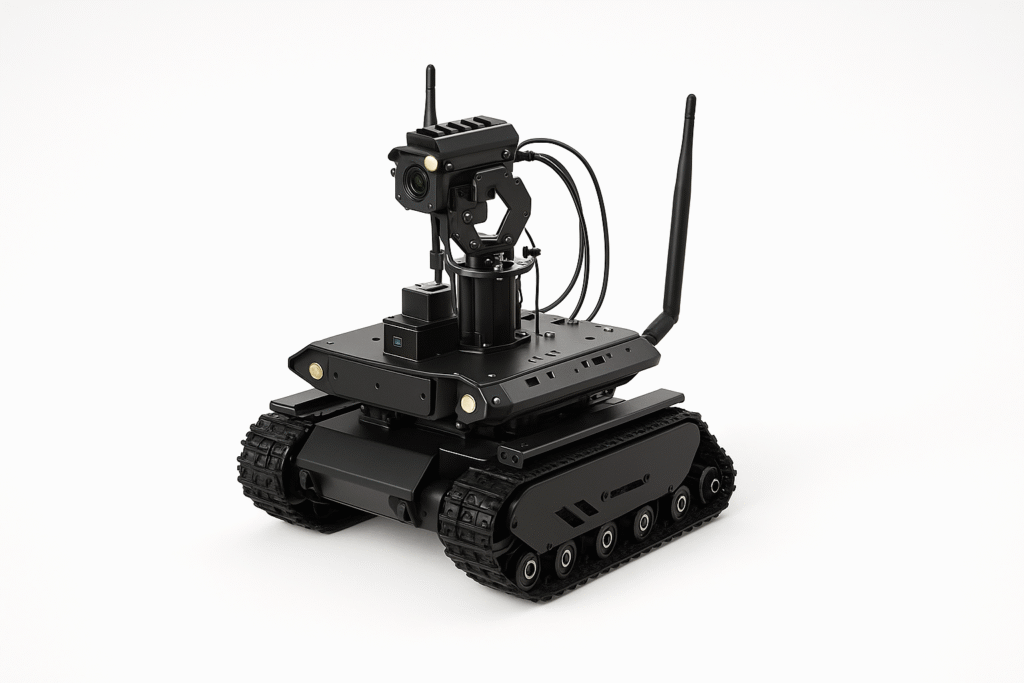
The UGV Beast ROS 2 con Jetson Orin is a versatile mobile robot platform designed for both hobbyists and professionals. It’s an open-source off-road tracked robot that leverages the power of NVIDIA’s Jetson Orin series boards to deliver impressive AI capabilities. This robot is particularly suited for exploration and development in rugged environments, thanks to its robust design and advanced computing power.

First, let’s delve into its applications. The UGV Beast excels in providing a platform for developing and testing autonomous navigation systems. With its high-torque dual-axis pan-tilt system and 360° flexible omnidirectional movement, it can handle complex terrains with ease. Additionally, it supports advanced computer vision tasks, making it ideal for projects involving object detection, mapping, and navigation.

Now, let’s talk about how it works. At its core, the UGV Beast is powered by the Jetson Orin Nano, a compact yet powerful computing module. This module enables high-performance AI processing, which is crucial for tasks such as real-time video processing and machine learning applications. The robot’s dual-controller setup, featuring an ESP32 sub-controller, manages motion control and sensor data processing, ensuring smooth and precise operations.

The UGV Beast’s hardware is built to endure tough conditions. It features a stainless steel chassis with a tracked design, providing excellent off-road capabilities. Its suspension system allows it to traverse uneven terrains while minimizing impacts. Moreover, its power supply system supports continuous operation, thanks to its 3S lithium battery module.

In terms of software, the robot runs on Ubuntu 22.04 with ROS2 Humble LTS. This setup offers a wide array of functionalities and resources for autonomous robotics development. The ROS2 framework allows for modular programming, enabling seamless integration of various sensors and components. The robot’s web application interface facilitates remote control and monitoring, eliminating the need for additional software installations.

The UGV Beast also comes equipped with a 5MP wide-angle camera and a Lidar system, enhancing its ability to perceive its environment. These sensors are instrumental in executing tasks like mapping and navigation. Furthermore, the robot’s real-time video transmission capabilities enable users to observe and interact with it from a distance, making it a valuable tool for research and education.

Key Parameters

Below is a table showcasing some of the typical values for the UGV Beast ROS 2 con Jetson Orin:

Parameter Typical Value
Dimensions (L×W×H) 196 × 231 × 286 mm
Weight 2915.5±5 g
Pan-Tilt Degrees of Freedom 2
Servo Torque 30 kg.cm
Camera Field of View 160°
Max Speed 0.35 m/s
Battery Support 3x 18650 lithium batteries

Concrete Use Case

Consider a scenario where you’re tasked with developing an autonomous surveillance system for a remote construction site. The UGV Beast ROS 2 con Jetson Orin can serve as a reliable solution. First, you’ll need to configure the robot’s network settings to connect to your local network. Using its web application, you can remotely monitor and control the robot from any device with internet access.

Next, you’ll deploy the robot on-site. Thanks to its rugged design, it can navigate the uneven ground typical of construction areas, avoiding obstacles and capturing real-time footage using its wide-angle camera. With its Lidar and depth camera, the robot can map the environment, providing a detailed layout of the site.

The robot’s AI capabilities enable it to recognize and track specific objects or individuals, making it an effective tool for monitoring site activities. As it patrols, it can send alerts and updates through its web interface, allowing you to respond promptly to any unusual occurrences.

For extended operations, the UGV Beast’s battery system supports continuous use while charging, ensuring that it remains operational throughout its patrols. This feature is particularly valuable in remote areas where frequent battery replacements might be impractical.

Overall, the UGV Beast ROS 2 con Jetson Orin offers a comprehensive solution for autonomous surveillance, combining robust hardware with sophisticated AI and remote monitoring capabilities.

Common Mistakes and How to Avoid Them

  • Failing to properly configure network settings: Always verify the network connection before deployment.
  • Incorrectly installing batteries: Ensure correct polarity to avoid damage.
  • Overlooking software updates: Regularly check for updates to maintain optimal performance.
  • Ignoring operational limits: Adhere to the robot’s weight and speed limits to prevent mechanical issues.
  • Neglecting environmental conditions: Avoid using the robot in waterlogged areas, as it is not waterproof.

Conclusion + Call to Action

The UGV Beast ROS 2 con Jetson Orin is a powerful tool for exploring the world of autonomous robotics. Whether you’re a beginner or a seasoned developer, this robot provides a solid platform for learning and innovation. With its advanced AI features and robust design, it’s well-suited for a variety of applications. Start your journey into robotics today and see what you can create. More information at prometeo.blog

Official sources

Quick Quiz

Question 1: What is the main purpose of the UGV Beast ROS 2 con Jetson Orin?


Question 2: Which computing module powers the UGV Beast?


Question 3: What type of movement does the UGV Beast support?


Question 4: What is a key feature of the UGV Beast's hardware design?


Question 5: What additional controller does the UGV Beast use for motion control?


Third-party readings

Find this product on Amazon

Go to Amazon

As an Amazon Associate, I earn from qualifying purchases. If you buy through this link, you help keep this project running.
Micro Tutorial: UGV Beast ROS 2 con Jetson Orin