Practical case: Linear supply voltage smoothing

Linear supply voltage smoothing prototype (Maker Style)

Level: Medium. Compare voltage ripple in a basic power supply by varying filtering capacitance under load.

Objective and use case

In this practical case, you will build a Full-Wave Bridge Rectifier circuit coupled with a selectable filter capacitor bank and a resistive load. You will analyze how the value of the filter capacitor affects the quality of the DC output by measuring the «ripple» voltage superimposed on the DC signal.

  • Audio Power Supplies: Reducing 50/60 Hz hum in amplifiers and speakers.
  • Digital Logic Power: Ensuring stable voltage levels to prevent microcontroller resets or erratic behavior.
  • Sensor Conditioning: Providing clean DC power to analog sensors for accurate readings.
  • Battery Charging: Smoothing the charging current to prolong battery life.

Expected outcome:
* Waveform Transformation: Visual observation of AC sine wave converting to pulsing DC, then to smooth DC.
* Ripple Voltage (Vripple): A high peak-to-peak ripple voltage (> 5 V) with a small capacitor (10 µF).
* Smoothing Effect: A significantly reduced ripple voltage (< 0.5 V) when switching to a large capacitor (470 µF).
* Target Audience: Intermediate electronics students and hobbyists familiar with AC/DC concepts.

Materials

  • V1: 12 V (RMS) AC transformer secondary or AC function generator (60 Hz), function: AC power source.
  • D1: 1N4007 Diode, function: Bridge rectifier top-left.
  • D2: 1N4007 Diode, function: Bridge rectifier top-right.
  • D3: 1N4007 Diode, function: Bridge rectifier bottom-left.
  • D4: 1N4007 Diode, function: Bridge rectifier bottom-right.
  • R1: 220 Ω resistor (2 Watt rating recommended), function: Static Load.
  • C1: 10 µF electrolytic capacitor (25 V or higher), function: Low-value filter.
  • C2: 470 µF electrolytic capacitor (25 V or higher), function: High-value filter.
  • S1: SPDT Switch or jumper wire, function: Selects between C1 and C2.
  • Test Equipment: Oscilloscope (preferred) or Multimeter with AC/DC measurement capabilities.

Wiring guide

Construct the circuit using the following node connections. Ensure electrolytic capacitors are connected with correct polarity (Positive terminal to V_DC, Negative terminal to 0 / GND).

  • V1 (Source): Connects between node AC_L and node AC_N.
  • D1: Anode connects to AC_L, Cathode connects to V_DC.
  • D2: Anode connects to AC_N, Cathode connects to V_DC.
  • D3: Anode connects to 0 (GND), Cathode connects to AC_L.
  • D4: Anode connects to 0 (GND), Cathode connects to AC_N.
  • R1 (Load): Connects between node V_DC and node 0 (GND).
  • C1 (Test Case A): Positive terminal to V_DC, Negative terminal to 0 (GND).
  • C2 (Test Case B): Positive terminal to V_DC, Negative terminal to 0 (GND) (Replace C1 with C2 for second test).

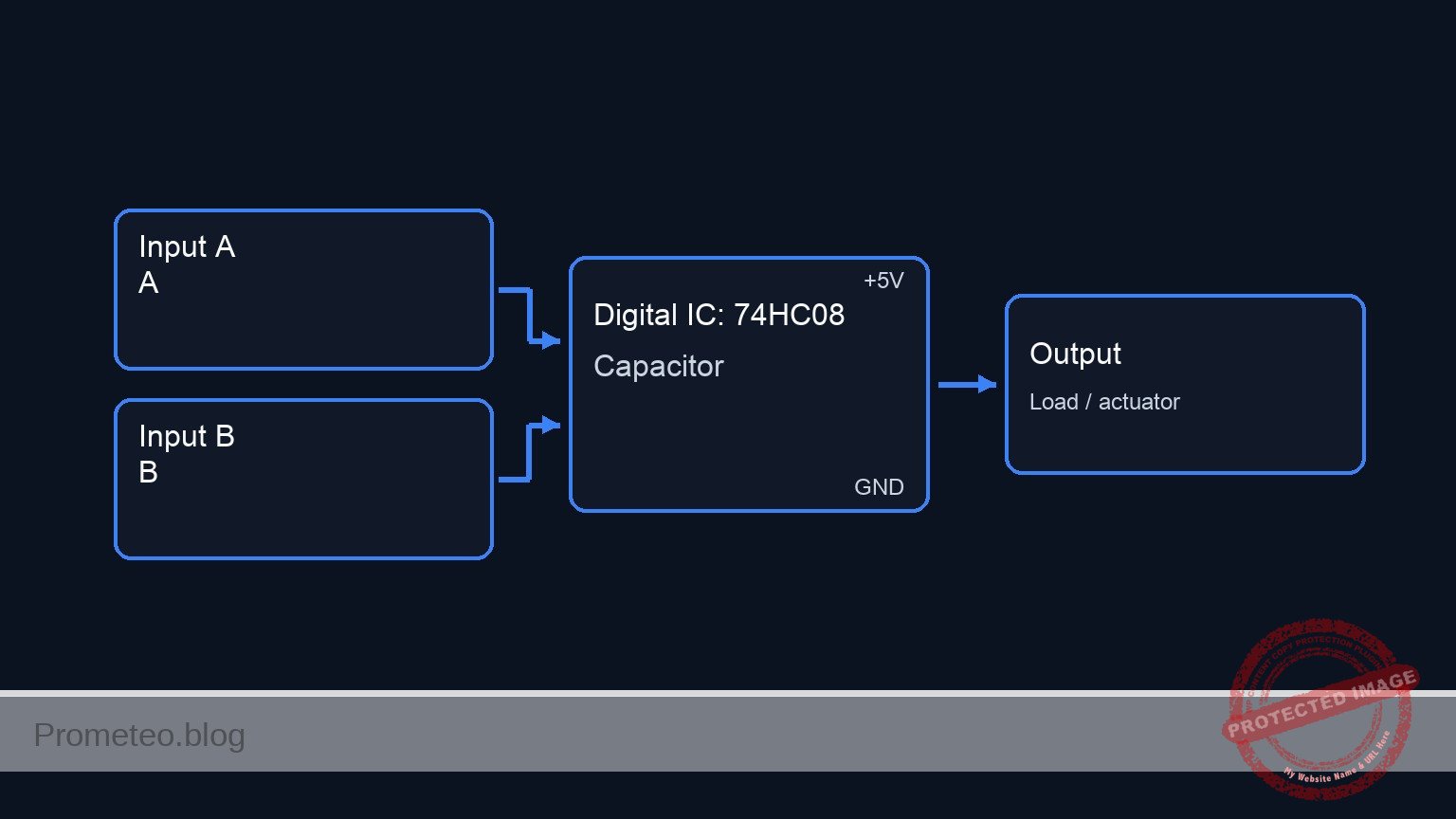
Conceptual block diagram

Conceptual block diagram — LM7812 Linear Power Supply Smoothing
Quick read: inputs → main block → output (actuator or measurement). This summarizes the ASCII schematic below.

Schematic

[ INPUT SOURCE ]              [ RECTIFICATION ]                [ FILTER STAGE ]                 [ OUTPUT LOAD ]

                                                                  +-> [ Capacitor C1 ] -+
                                                                  |     (10 uF)         |
 [ AC Source V1 ] --(12 V AC)--> [ Bridge Rectifier ] --(Raw DC)-->+                     +--(V_DC)--> [ Load Resistor R1 ]
    (12 V RMS)                   [  D1, D2, D3, D4  ]              |   [ Switch S1  ]    |            (220 Ohm)
                                                                  +-> [ Capacitor C2 ] -+                |
                                                                        (470 uF)                         |
                                                                                                         |
                                                                                                         v
                                                                                                  [ Oscilloscope ]
                                                                                                  (Measure Ripple)
Schematic (ASCII)

Measurements and tests

Follow these steps to validate the smoothing efficiency:

  1. Baseline (No Capacitor): Temporarily remove any capacitor. Measure V_DC with an oscilloscope. You should see a full-wave rectified signal (humps going to 0 V) at 120 Hz (or 100 Hz).
  2. Small Capacitor Test (C1 = 10 µ F):
    • Insert $C1$.
    • Measure the peak voltage (Vpeak) and the minimum valley voltage (Vmin).
    • Calculate Ripple: Vripple = Vpeak – Vmin.
    • Expectation: Significant sawtooth ripple (fast discharge).
  3. Large Capacitor Test (C2 = 470 µ F):
    • Replace $C1$ with $C2$.
    • Measure Vpeak and Vmin again.
    • Expectation: The DC line is much flatter; Vmin stays close to Vpeak.
  4. DC Average: Switch your multimeter to DC Volts. Compare the reading of $C1$ vs $C2$. The average voltage with $C2$ will be higher because the capacitor maintains the charge longer.

SPICE netlist and simulation

Reference SPICE Netlist (ngspice) — excerptFull SPICE netlist (ngspice)

* Linear supply voltage smoothing
*
* Description:
* This netlist simulates a full-wave bridge rectifier power supply with a 
* selectable smoothing capacitor.
* - 0ms to 100ms: C1 (10uF) is connected (High Ripple case).
* - 100ms to 200ms: C2 (470uF) is connected (Low Ripple case), simulating
*   switch S1 toggling.
*
* Connections:
* V1 (AC Source) -> Nodes AC_L, AC_N
* D1-D4 (Bridge) -> Nodes AC_L, AC_N, V_DC, 0 (GND)
* R1 (Load)      -> Nodes V_DC, 0
* S1 (Switch)    -> Modeled via S_C1 and S_C2 connecting V_DC to C1/C2
*
* -----------------------------------------------------------------------------

* --- AC Power Source ---
* 12V RMS AC, 60Hz. 
* Peak Voltage = 12 * sqrt(2) = 16.97 V
* ... (truncated in public view) ...

Copy this content into a .cir file and run with ngspice.

🔒 Part of this section is premium. With the 7-day pass or the monthly membership you can access the full content (materials, wiring, detailed build, validation, troubleshooting, variants and checklist) and download the complete print-ready PDF pack.

* Linear supply voltage smoothing
*
* Description:
* This netlist simulates a full-wave bridge rectifier power supply with a 
* selectable smoothing capacitor.
* - 0ms to 100ms: C1 (10uF) is connected (High Ripple case).
* - 100ms to 200ms: C2 (470uF) is connected (Low Ripple case), simulating
*   switch S1 toggling.
*
* Connections:
* V1 (AC Source) -> Nodes AC_L, AC_N
* D1-D4 (Bridge) -> Nodes AC_L, AC_N, V_DC, 0 (GND)
* R1 (Load)      -> Nodes V_DC, 0
* S1 (Switch)    -> Modeled via S_C1 and S_C2 connecting V_DC to C1/C2
*
* -----------------------------------------------------------------------------

* --- AC Power Source ---
* 12V RMS AC, 60Hz. 
* Peak Voltage = 12 * sqrt(2) = 16.97 V
V1 AC_L AC_N SIN(0 16.97 60)

* --- Bridge Rectifier (1N4007) ---
* D1: Anode=AC_L, Cathode=V_DC
D1 AC_L V_DC D1N4007
* D2: Anode=AC_N, Cathode=V_DC
D2 AC_N V_DC D1N4007
* D3: Anode=GND, Cathode=AC_L
D3 0 AC_L D1N4007
* D4: Anode=GND, Cathode=AC_N
D4 0 AC_N D1N4007

* --- Load Resistor ---
* 220 Ohm resistor across the DC output
R1 V_DC 0 220

* --- Filter Capacitors & Switching Logic ---
* We simulate the SPDT switch S1 by using two voltage-controlled switches.
* S_C1 connects V_DC to C1. S_C2 connects V_DC to C2.
* Control signals ensure only one is active at a time (break-before-make effectively).

* Capacitor C1 (10uF) path
S_C1 V_DC NET_C1 CTRL_C1 0 SW_MODEL
C1 NET_C1 0 10u

* Capacitor C2 (470uF) path
S_C2 V_DC NET_C2 CTRL_C2 0 SW_MODEL
C2 NET_C2 0 470u

* --- Control Signals (Dynamic Stimuli) ---
* CTRL_C1: Starts High (5V), goes Low (0V) at 100ms.
* Keeps C1 connected for the first 100ms.
V_CTRL_C1 CTRL_C1 0 PULSE(5 0 100m 1u 1u 1 2)

* CTRL_C2: Starts Low (0V), goes High (5V) at 100ms.
* Connects C2 for the remainder of the simulation.
V_CTRL_C2 CTRL_C2 0 PULSE(0 5 100m 1u 1u 1 2)

* --- Component Models ---
* Generic model for 1N4007 Power Diode
.model D1N4007 D(IS=7.03n RS=0.034 N=1.8 BV=1000 IBV=5u CJO=10p TT=100n)

* Ideal Switch Model (Threshold=2.5V, On-Res=10mOhm, Off-Res=100MegOhm)
.model SW_MODEL SW(Vt=2.5 Ron=0.01 Roff=100Meg)

* --- Analysis Directives ---
* Transient analysis: 200ms total time, 50us step size.
* This captures approx 6 cycles with C1 and 6 cycles with C2.
.tran 50u 200m

* Print directives for simulation log/plotting
.print tran V(V_DC) V(AC_L) V(AC_N)

.end

Simulation Results (Transient Analysis)

Simulation Results (Transient Analysis)
Show raw data table (4050 rows)
Index   time            v(v_dc)         v(ac_l)         v(ac_n)
0	0.000000e+00	6.658603e-23	4.156609e-18	4.156609e-18
1	5.000000e-07	1.885342e-19	1.599385e-03	-1.59938e-03
2	1.000000e-06	6.893339e-12	3.198770e-03	-3.19877e-03
3	2.000000e-06	3.416858e-11	6.397539e-03	-6.39754e-03
4	4.000000e-06	1.718574e-10	1.279507e-02	-1.27951e-02
5	8.000000e-06	9.966330e-10	2.559012e-02	-2.55901e-02
6	1.325366e-05	3.861142e-09	4.239524e-02	-4.23952e-02
7	2.095388e-05	1.446061e-08	6.702595e-02	-6.70259e-02
8	3.129676e-05	5.099200e-08	1.001088e-01	-1.00109e-01
9	4.482862e-05	1.835180e-07	1.433897e-01	-1.43390e-01
10	6.128867e-05	6.888081e-07	1.960312e-01	-1.96031e-01
11	8.042390e-05	2.827323e-06	2.572195e-01	-2.57217e-01
12	1.019046e-04	1.303092e-05	3.258956e-01	-3.25883e-01
13	1.254895e-04	6.815023e-05	4.012964e-01	-4.01228e-01
14	1.509795e-04	4.024321e-04	4.828893e-01	-4.82487e-01
15	1.782228e-04	2.626479e-03	5.709779e-01	-5.68351e-01
16	2.071492e-04	1.723315e-02	6.705660e-01	-6.53333e-01
17	2.380619e-04	8.388777e-02	8.024272e-01	-7.18539e-01
18	2.734880e-04	2.529945e-01	9.997734e-01	-7.46779e-01
19	3.097680e-04	4.785526e-01	1.227902e+00	-7.49349e-01
20	3.521718e-04	7.463483e-01	1.496384e+00	-7.50036e-01
21	3.938443e-04	1.008721e+00	1.759554e+00	-7.50833e-01
22	4.438443e-04	1.322891e+00	2.074586e+00	-7.51694e-01
23	4.938443e-04	1.636032e+00	2.388601e+00	-7.52568e-01
... (4026 more rows) ...

Common mistakes and how to avoid them

  • Reversed Capacitor Polarity: Electrolytic capacitors will explode if connected backwards. Solution: Ensure the side marked with a stripe (negative) connects to the 0 (GND) node and the other side to the positive rectifier output.
  • Under-rated Resistor Power: A 220 Ω resistor at ~15 V DC dissipates about 1 Watt (P = V^2 / R). Using a standard 1/4 W resistor will burn it. Solution: Use a power resistor (2 W+) or increase resistance to 1 kΩ (though this reduces ripple visibility).
  • Measuring Ripple on DC Setting: A standard multimeter on DC mode averages the voltage, hiding the ripple. Solution: Use an oscilloscope for visual analysis, or set the multimeter to AC mode to measure the RMS value of the ripple component only.

Troubleshooting

  • Symptom: No output voltage at V_DC.
    • Cause: AC source not on or bridge diodes open/connected incorrectly.
    • Fix: Check V1 output and verify diode orientation (ring marks on cathodes).
  • Symptom: Ripple does not change when swapping capacitors.
    • Cause: Load resistor $R1$ is missing or open circuit. Without a load, the capacitor has no path to discharge, so voltage stays at peak regardless of capacitance.
    • Fix: Ensure $R1$ is securely connected parallel to the capacitor.
  • Symptom: Fuse blows or transformer hums loudly.
    • Cause: Short circuit in the bridge (e.g., D1 and D3 shorting AC mains).
    • Fix: Power off immediately and check wiring. Ensure AC_L and AC_N are not directly connected to 0 or each other.

Possible improvements and extensions

  1. Voltage Regulator: Add an LM7812 or LM317 linear regulator after the capacitor to see how active regulation eliminates the remaining ripple.
  2. RC Pi Filter: Add a series resistor and a second capacitor ($C-R-C$) to create a passive low-pass filter, further reducing ripple without active components (at the cost of voltage drop).

More Practical Cases on Prometeo.blog

Find this product and/or books on this topic on Amazon

Go to Amazon

As an Amazon Associate, I earn from qualifying purchases. If you buy through this link, you help keep this project running.

Quick Quiz

Question 1: What is the primary objective of the practical case described in the text?


Question 2: Which component is responsible for converting the AC sine wave into pulsing DC in the described circuit?


Question 3: In the context of audio power supplies, what is a key benefit of reducing voltage ripple?


Question 4: What is the expected outcome for ripple voltage when using a small capacitor (10 µF)?


Question 5: Why is stable voltage important for Digital Logic Power as mentioned in the use cases?


Question 6: According to the expected outcome, how does the waveform transform through the circuit stages?


Question 7: Based on the diagram context, what is the RMS voltage of the AC source?


Question 8: Which component is placed in parallel with the capacitor bank to simulate a load?


Question 9: What is the specific value of the larger capacitor (C2) mentioned in the diagram context?


Question 10: How does smoothing the charging current benefit battery charging applications?


Carlos Núñez Zorrilla
Electronics & Computer Engineer

Telecommunications Electronics Engineer and Computer Engineer (official degrees in Spain).
Follow me:


Practical case: RC audio low-pass filter

RC audio low-pass filter prototype (Maker Style)

Level: Medium — Design and analyze a circuit that attenuates high frequencies using a capacitor and a resistor to verify the cutoff frequency.

Objective and use case

In this practical case, you will build a passive first-order Low-Pass Filter (LPF) using a resistor and a capacitor connected in series. You will analyze how the capacitor’s reactance changes with frequency, allowing low frequencies to pass while attenuating signals above a calculated cutoff point.

Why it is useful:
* Audio noise reduction: Removes high-frequency hiss or static from audio recordings.
* Subwoofer crossovers: Directs only low-frequency bass notes to the subwoofer driver.
* Signal conditioning: Acts as an anti-aliasing filter before Analog-to-Digital Conversion (ADC) to prevent digital artifacts.
* Power supply smoothing: Filters out high-frequency ripple noise from DC power lines.

Expected outcome:
* Passband: Frequencies below ~1 kHz retain approximately their original amplitude (Vin ≈ Vout).
* Cutoff point: At the calculated cutoff frequency (fc), the output voltage drops to approximately 70.7% of the input voltage (-3 dB).
* Stopband: Frequencies significantly higher than 1 kHz are heavily attenuated.
* Phase shift: Observe a phase lag of -45° at the cutoff frequency.

Target audience and level: Electronics students and audio enthusiasts; Level: Medium.

Materials

  • V1: AC Voltage Source (Sine Wave, 5 Vpk, tunable frequency), function: Input audio signal simulation.
  • R1: 1.6 kΩ resistor, function: Current limiting and voltage division partner.
  • C1: 100 nF capacitor (ceramic or film), function: Frequency-dependent shunt to ground.
  • Measurement Tool: Oscilloscope (Dual channel) or Bode Plotter.

Wiring guide

Construct the circuit using the following connections. Note the explicit node names for analysis.

  • V1 (Source): Connect the positive terminal to node VIN and the negative terminal to node 0 (GND).
  • R1: Connect one leg to node VIN and the other leg to node VOUT.
  • C1: Connect one leg to node VOUT and the other leg to node 0 (GND).
  • Oscilloscope Ch1: Connect probe tip to VIN and ground clip to 0.
  • Oscilloscope Ch2: Connect probe tip to VOUT and ground clip to 0.

Conceptual block diagram

Conceptual block diagram — RC Low Pass Filter
Quick read: inputs → main block → output (actuator or measurement). This summarizes the ASCII schematic below.

Schematic

[ SIGNAL SOURCE ]               [ RC FILTER STAGE ]                 [ MEASUREMENT ]

                              +--------------------------------------> [ Scope Ch1 (Input) ]
                              |
[ V1: AC Source ] --(VIN)-->--+--> [ R1: 1.6k Resistor ] --(VOUT)-->--+--> [ Scope Ch2 (Output) ]
      (5 Vpk)                                                         |
                                                                      +--> [ C1: 100nF Cap ] --> GND
Schematic (ASCII)

Measurements and tests

Follow these steps to validate the filter design (fc ≈ 1 kHz):

  1. Low Frequency Test (Passband):

    • Set V1 to 100 Hz.
    • Measure Vout peak-to-peak. It should be nearly identical to Vin (approx. 5 V).
  2. Cutoff Frequency Verification (fc):

    • Increase V1 frequency to 1 kHz.
    • Measure Vout. It should drop to approximately 0.707 × Vin (approx. 3.53 V).
    • Measure the phase difference between Ch1 and Ch2. Vout should lag Vin by roughly 45°.
  3. High Frequency Test (Stopband):

    • Set V1 to 10 kHz (one decade above cutoff).
    • Measure Vout. The amplitude should be significantly attenuated (approx. 0.5 V or -20 dB relative to input).
  4. Bode Plot Analysis (Optional):

    • If using a simulation or Bode plotter, sweep from 10 Hz to 100 kHz. Observe the «roll-off» slope of -20 dB/decade after the cutoff point.

SPICE netlist and simulation

Reference SPICE Netlist (ngspice) — excerptFull SPICE netlist (ngspice)

* Practical case: RC audio low-pass filter

* --- Components per BOM and Wiring Guide ---
* V1: AC Voltage Source (Sine Wave, 5 Vpk, 1kHz, AC 1V for Bode)
* Connected: Positive -> VIN, Negative -> 0 (GND)
V1 VIN 0 DC 0 AC 1 SIN(0 5 1000)

* R1: 1.6 kOhm resistor
* Connected: VIN -> VOUT
R1 VIN VOUT 1.6k

* C1: 100 nF capacitor
* Connected: VOUT -> 0 (GND)
C1 VOUT 0 100n

* --- Simulation Commands ---
* Using .control block to sequence analyses and printing correctly in ngspice
.control
    * Transient Analysis: 1kHz signal, run for 5ms
    tran 10u 5ms
* ... (truncated in public view) ...

Copy this content into a .cir file and run with ngspice.

🔒 Part of this section is premium. With the 7-day pass or the monthly membership you can access the full content (materials, wiring, detailed build, validation, troubleshooting, variants and checklist) and download the complete print-ready PDF pack.

* Practical case: RC audio low-pass filter

* --- Components per BOM and Wiring Guide ---
* V1: AC Voltage Source (Sine Wave, 5 Vpk, 1kHz, AC 1V for Bode)
* Connected: Positive -> VIN, Negative -> 0 (GND)
V1 VIN 0 DC 0 AC 1 SIN(0 5 1000)

* R1: 1.6 kOhm resistor
* Connected: VIN -> VOUT
R1 VIN VOUT 1.6k

* C1: 100 nF capacitor
* Connected: VOUT -> 0 (GND)
C1 VOUT 0 100n

* --- Simulation Commands ---
* Using .control block to sequence analyses and printing correctly in ngspice
.control
    * Transient Analysis: 1kHz signal, run for 5ms
    tran 10u 5ms
    * Print transient results (Oscilloscope)
    print V(VIN) V(VOUT)

    * AC Analysis: Bode Plot, 10 Hz to 100 kHz
    ac dec 10 10 100k
    * Print AC results (Bode Plotter)
    print V(VOUT)

    * Operating Point
    op
.endc

.end

Simulation Results (Transient Analysis)

Simulation Results (Transient Analysis)
Show raw data table (512 rows)
Index   time            v(vin)          v(vout)
0	0.000000e+00	0.000000e+00	0.000000e+00
1	1.000000e-07	3.141592e-03	1.962269e-06
2	1.084035e-07	3.405596e-03	2.141025e-06
3	1.252105e-07	3.933604e-03	2.526248e-06
4	1.588245e-07	4.989618e-03	3.462948e-06
5	2.260525e-07	7.101647e-03	6.001184e-06
6	3.605086e-07	1.132570e-02	1.373560e-05
7	6.294206e-07	1.977378e-02	3.982505e-05
8	1.167245e-06	3.666975e-02	1.343969e-04
9	2.242893e-06	7.046023e-02	4.923968e-04
10	4.394190e-06	1.380300e-01	1.878099e-03
11	8.696783e-06	2.730815e-01	7.282571e-03
12	1.730197e-05	5.424874e-01	2.825846e-02
13	2.730197e-05	8.535162e-01	6.884897e-02
14	3.730197e-05	1.161176e+00	1.257276e-01
15	4.730197e-05	1.464254e+00	1.976662e-01
16	5.730197e-05	1.761553e+00	2.834382e-01
17	6.730197e-05	2.051900e+00	3.818193e-01
18	7.730197e-05	2.334149e+00	4.915893e-01
19	8.730197e-05	2.607186e+00	6.115335e-01
20	9.730197e-05	2.869934e+00	7.404442e-01
21	1.073020e-04	3.121356e+00	8.771230e-01
22	1.173020e-04	3.360458e+00	1.020383e+00
23	1.273020e-04	3.586299e+00	1.169049e+00
... (488 more rows) ...

Common mistakes and how to avoid them

  1. Swapping components (High-Pass vs. Low-Pass):
    • Error: Connecting C1 in series and R1 to ground creates a High-Pass filter.
    • Solution: Ensure the Capacitor is the component connected between the output node and Ground.
  2. Ignoring Load Impedance:
    • Error: Connecting a low-impedance load (like an 8 Ω speaker) directly to VOUT.
    • Solution: This passive filter has high output impedance. Use an op-amp buffer if driving a heavy load.
  3. Using Polarized Capacitors Incorrectly:
    • Error: Using an electrolytic capacitor with reverse polarity in an AC circuit without a DC bias.
    • Solution: For pure AC audio signals, use non-polarized capacitors (ceramic, film, or bipolar electrolytic).

Troubleshooting

  • Symptom: Vout is zero at all frequencies.
    • Cause: Short circuit across C1 or open circuit at R1.
    • Fix: Check continuity across C1; if it beeps, the capacitor is shorted or the node is grounded accidentally.
  • Symptom: No attenuation occurs at high frequencies.
    • Cause: C1 is open (broken) or R1 is shorted.
    • Fix: Replace C1. Verify R1 measures 1.6 kΩ.
  • Symptom: Cutoff frequency is totally wrong.
    • Cause: Incorrect component values (e.g., using 100 pF instead of 100 nF).
    • Fix: Double-check color codes on resistors and markings on capacitors (104 code = 100 nF).

Possible improvements and extensions

  1. Second-Order Filter: Cascade two RC stages in series to achieve a steeper roll-off (-40 dB/decade) for better noise rejection.
  2. Active Low-Pass Filter: Add an Operational Amplifier (Op-Amp) to create an active filter, allowing for signal gain and preventing the load from affecting the filter’s frequency response.

More Practical Cases on Prometeo.blog

Find this product and/or books on this topic on Amazon

Go to Amazon

As an Amazon Associate, I earn from qualifying purchases. If you buy through this link, you help keep this project running.

Quick Quiz

Question 1: What is the primary function of the passive first-order Low-Pass Filter (LPF) described in the text?


Question 2: Which two components are connected in series to build this specific filter?


Question 3: At the cutoff frequency (fc), what percentage of the input voltage is the output voltage approximately equal to?


Question 4: What is the decibel drop at the cutoff frequency?


Question 5: Which of the following is NOT listed as a use case for this circuit?


Question 6: In the expected outcome, what happens to frequencies in the passband (below ~1 kHz)?


Question 7: Why is this filter useful before Analog-to-Digital Conversion (ADC)?


Question 8: How does the capacitor behave in this circuit to achieve filtering?


Question 9: What is a specific application of this filter in audio systems mentioned in the text?


Question 10: What does this circuit filter out from DC power lines?


Carlos Núñez Zorrilla
Electronics & Computer Engineer

Telecommunications Electronics Engineer and Computer Engineer (official degrees in Spain).
Follow me:


Practical case: Modulated light audio receiver

Modulated light audio receiver prototype (Maker Style)

Level: Medium – Build a receiver capable of demodulating an audio signal transmitted via an LED light beam using a photodiode.

Objective and use case

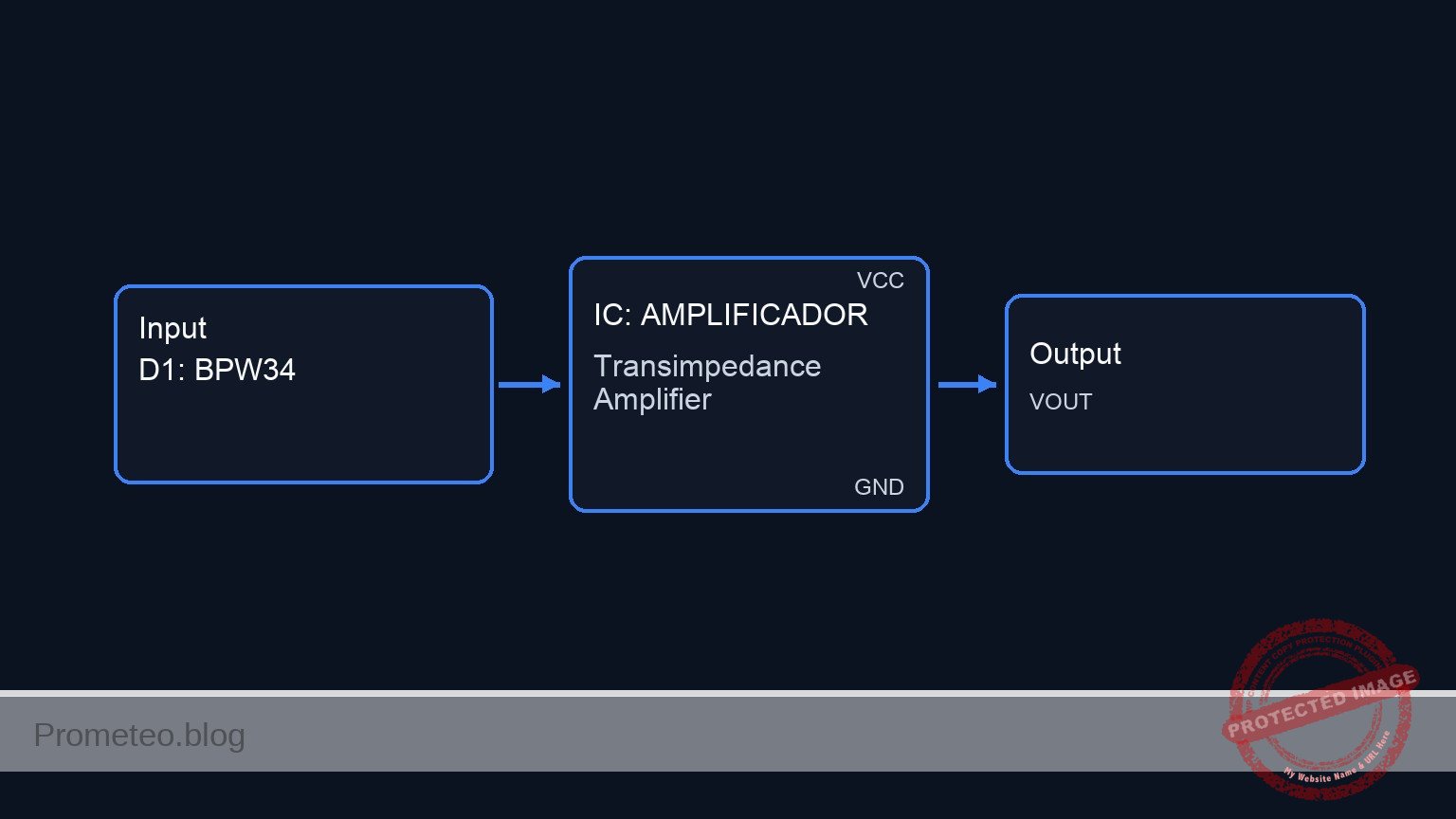
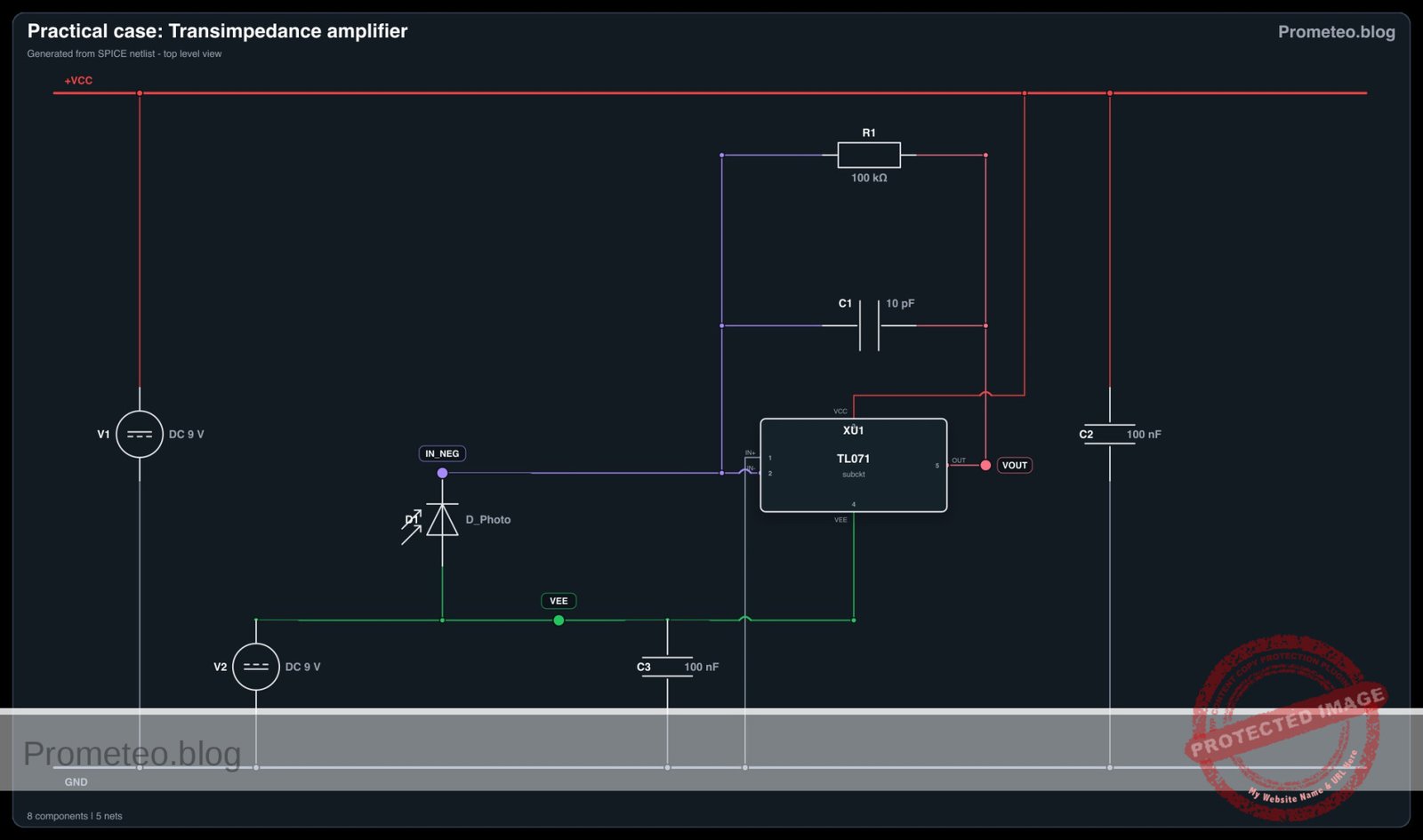
In this practical case, you will build an analog optical receiver using a high-speed photodiode configured in photoconductive mode, followed by a Transimpedance Amplifier (TIA) and an audio power amplifier. This circuit detects changes in light intensity modulated by an audio source and converts them back into electrical signals to drive a speaker.

Why it is useful:
* Optical Wireless Communication (OWC): Demonstrates the fundamental physics behind Li-Fi and infrared remote controls.
* Galvanic Isolation: Allows audio transmission between devices without a physical ground connection, preventing ground loops.
* Security: Unlike radio frequency (RF), optical signals are confined to the room and cannot pass through opaque walls.
* Interference Immunity: Immune to electromagnetic interference (EMI) that typically affects copper wire transmission.

Expected outcome:
* Signal Output: A measurable voltage waveform at the TIA output (V_PRE) that mirrors the transmitted audio waveform.
* Audio Output: Clear sound reproduction through the loudspeaker (LS1) when the photodiode receives modulated light.
* Voltage Levels: The TIA output should ride on a DC bias (approx. VCC/2) with an AC signal swing depending on light intensity.
* Volume Control: Adjustment of the audio level via the potentiometer (R_VOL).

Target audience: Electronics students and hobbyists interested in analog signal conditioning.

Materials

  • V1: 9 V DC voltage source, function: Main circuit power supply.
  • D1: BPW34 Photodiode, function: Optical sensor (light to current converter).
  • U1: TL071 Operational Amplifier, function: Transimpedance Amplifier (TIA).
  • U2: LM386N-1 Audio Amplifier IC, function: Power amplification for speaker.
  • R_F: 100 kΩ resistor, function: TIA feedback resistor (sets gain).
  • R_B1: 10 kΩ resistor, function: Voltage divider top for VCC/2 bias.
  • R_B2: 10 kΩ resistor, function: Voltage divider bottom for VCC/2 bias.
  • R_VOL: 10 kΩ potentiometer, function: Audio volume control.
  • C_DEC: 100 nF ceramic capacitor, function: Power supply decoupling.
  • C_BIAS: 10 µF electrolytic capacitor, function: Stabilize VCC/2 bias point.
  • C_COUP: 4.7 µF electrolytic capacitor, function: DC blocking between TIA and Audio Amp.
  • C_OUT: 220 µF electrolytic capacitor, function: Output coupling for speaker.
  • C_GAIN: 10 µF electrolytic capacitor, function: LM386 gain setting (Pins 1-8).
  • LS1: 8 Ω / 0.5W Speaker, function: Audio transducer.

Wiring guide

This guide defines the connections using specific SPICE node names: VCC, 0 (GND), V_BIAS, N_INV (Inverting input), V_PRE (Pre-amp out), V_WIPER (Potentiometer out), and V_SPK (Amp out).

Power and Bias:
* V1: Positive terminal to VCC, Negative terminal to 0.
* R_B1: Connects between VCC and V_BIAS.
* R_B2: Connects between V_BIAS and 0.
* C_BIAS: Positive lead to V_BIAS, Negative lead to 0.
* C_DEC: Connects between VCC and 0 (near U1).

Transimpedance Amplifier (Stage 1):
* U1 (Op-Amp): V+ pin to VCC, V- pin to 0. Non-inverting input (+) to V_BIAS. Inverting input (-) to N_INV. Output pin to V_PRE.
* D1 (Photodiode): Cathode to VCC, Anode to N_INV (Reverse biased).
* R_F: Connects between N_INV and V_PRE.

Signal Coupling:
* C_COUP: Positive lead to V_PRE, Negative lead to NODE_POT_TOP.
* R_VOL: Top terminal to NODE_POT_TOP, Bottom terminal to 0, Wiper to V_WIPER.

Power Amplifier (Stage 2):
* U2 (LM386): Vs (Pin 6) to VCC, GND (Pin 4) to 0. Non-inverting Input (Pin 3) to V_WIPER. Inverting Input (Pin 2) to 0.
* C_GAIN: Connects between Pin 1 and Pin 8 of U2 (Positive to Pin 1).
* C_OUT: Positive lead to U2 Output (Pin 5), Negative lead to V_SPK.
* LS1: Connects between V_SPK and 0.

Conceptual block diagram

Conceptual block diagram — TL071 Optical Audio Receiver
Quick read: inputs → main block → output (actuator or measurement). This summarizes the ASCII schematic below.

Schematic

Title: Practical case: Modulated light audio receiver

      [ INPUT / SENSOR ]               [ STAGE 1: TIA PRE-AMP ]                  [ INTERSTAGE ]                [ STAGE 2: POWER AMP ]              [ OUTPUT ]

                                     +-----------[ R_F: 100k ]-----------+
                                     |           (Feedback)              |
                                     v                                   |
(Light) ~~~> [ D1: BPW34 ] --(I)--> [ (-) N_INV      U1: TL071      OUT ] --(V_PRE)--> [ C_COUP ] --> [ R_VOL: 10k ] --(V_WIPER)-->+
             (Photodiode)           |                                    |             (4.7uF)        (Volume Pot)                 |
                                    | (+) V_BIAS                         |                                                         |
                                    +----------------^-------------------+                                                         |
                                                     |                                                                             |
      [ POWER & BIAS ]                               |                                                                             v
                                                     |                                                                     [ IN+  U2: LM386  OUT ] --(V_SPK)--> [ C_OUT ] --> [ LS1: Speaker ]
    [ V1: 9 V DC Source ] --(VCC)--> (Powers U1, U2)  |                                                                     |                 |                (220uF)        (8 Ohm)
             |                                       |                                                                     |  Gain Pins 1-8  |                                  |
             +---> [ Bias Divider ] --(VCC/2 Ref)----+                                                                     +--------+--------+                                 GND
                   (R_B1, R_B2,                                                                                                     |
                    C_BIAS)                                                                                                    [ C_GAIN ]
                                                                                                                                (10uF)
Schematic (ASCII)

Measurements and tests

  1. Bias Point Check: Use a multimeter to measure the voltage at node V_BIAS. It should be approximately 4.5 V (half of VCC). If not, check R_B1 and R_B2.
  2. Ambient Light Level: Measure the DC voltage at V_PRE without any modulated signal (just ambient light). It should be slightly lower than V_BIAS depending on the ambient brightness hitting D1.
  3. Signal Acquisition:
    • Point a modulated light source (e.g., an LED connected to an audio output or a signal generator) at D1.
    • Use an oscilloscope at V_PRE. You should see an AC waveform superimposed on the DC level.
    • Measure the Vpp (Peak-to-Peak Voltage). It should be in the range of 100 mV to 1 V depending on the distance and light intensity.
  4. Audio Test: Turn R_VOL up slowly. You should hear the transmitted audio clearly from LS1.

SPICE netlist and simulation

Reference SPICE Netlist (ngspice) — excerptFull SPICE netlist (ngspice)

* Practical case: Modulated light audio receiver

* --- Component Models ---
* Generic Photodiode Model
.model D_BPW34 D(Is=1n Rs=5 Cjo=10p)

* --- Subcircuits ---

* TL071 Operational Amplifier Macro Model
* Pinout: 1=NonInv 2=Inv 3=V+ 4=V- 5=Out
.SUBCKT TL071 P_NI P_INV P_VCC P_VEE P_OUT
  * Input Impedance
  Rin P_NI P_INV 1T
  * Output Stage (Behavioral with Rail Limiting)
  * Models high open-loop gain and saturation at Rails +/- 1.5V
  B1 P_OUT 0 V=V(P_VEE) + 1.5 + (V(P_VCC)-V(P_VEE)-3) * (1 / (1 + exp(-100000 * (V(P_NI)-V(P_INV)))))
.ENDS TL071

* LM386 Audio Amplifier Macro Model
* Pinout: 1=Gain 2=Inv 3=NonInv 4=GND 5=Out 6=Vs 8=Gain
* ... (truncated in public view) ...

Copy this content into a .cir file and run with ngspice.

🔒 Part of this section is premium. With the 7-day pass or the monthly membership you can access the full content (materials, wiring, detailed build, validation, troubleshooting, variants and checklist) and download the complete print-ready PDF pack.

* Practical case: Modulated light audio receiver

* --- Component Models ---
* Generic Photodiode Model
.model D_BPW34 D(Is=1n Rs=5 Cjo=10p)

* --- Subcircuits ---

* TL071 Operational Amplifier Macro Model
* Pinout: 1=NonInv 2=Inv 3=V+ 4=V- 5=Out
.SUBCKT TL071 P_NI P_INV P_VCC P_VEE P_OUT
  * Input Impedance
  Rin P_NI P_INV 1T
  * Output Stage (Behavioral with Rail Limiting)
  * Models high open-loop gain and saturation at Rails +/- 1.5V
  B1 P_OUT 0 V=V(P_VEE) + 1.5 + (V(P_VCC)-V(P_VEE)-3) * (1 / (1 + exp(-100000 * (V(P_NI)-V(P_INV)))))
.ENDS TL071

* LM386 Audio Amplifier Macro Model
* Pinout: 1=Gain 2=Inv 3=NonInv 4=GND 5=Out 6=Vs 8=Gain
.SUBCKT LM386 P_G1 P_INV P_NI P_GND P_OUT P_VS P_G8
  * Internal Gain Resistor (1.35k) connecting Pins 1 and 8
  R_GAIN_INT P_G1 P_G8 1.35k
  * High resistance to GND to prevent floating node errors for the Gain capacitor
  R_C1 P_G1 0 100Meg
  R_C8 P_G8 0 100Meg
  
  * Audio Amplifier Behavioral Source
  * Self-biasing output to Vs/2
  * Fixed Gain approx 200 (Assuming C_GAIN is present externally)
  B_OUT P_OUT P_GND V=V(P_VS)/2 + 200*(V(P_NI)-V(P_INV))
.ENDS LM386

* --- Main Circuit ---

* Power Supply (9V)
V1 VCC 0 DC 9

* Power Supply Decoupling
C_DEC VCC 0 100n

* Bias Voltage Generator (VCC/2)
R_B1 VCC V_BIAS 10k
R_B2 V_BIAS 0 10k
C_BIAS V_BIAS 0 10u

* --- Stage 1: Transimpedance Amplifier (TIA) ---
* U1 TL071 Op-Amp
* Connections: NI=V_BIAS, INV=N_INV, V+=VCC, V-=0, OUT=V_PRE
XU1 V_BIAS N_INV VCC 0 V_PRE TL071

* Photodiode Sensor (Reverse Biased)
* Cathode to VCC, Anode to N_INV
D1 N_INV VCC D_BPW34

* Optical Signal Simulation
* Current source representing modulated light (1kHz square wave)
* Connected parallel to photodiode (Anode to Cathode current flow)
I_LIGHT N_INV VCC PULSE(0 2u 0 1u 1u 500u 1000u)

* Feedback Resistor
R_F N_INV V_PRE 100k

* --- Signal Coupling ---
* DC Blocking Capacitor
C_COUP V_PRE NODE_POT_TOP 4.7u

* Volume Potentiometer (10k)
* Modeled as voltage divider. Wiper set to 20% to manage gain.
* Top Resistor (8k)
R_VOL_TOP NODE_POT_TOP V_WIPER 8k
* Bottom Resistor (2k)
R_VOL_BOT V_WIPER 0 2k

* --- Stage 2: Power Amplifier ---
* U2 LM386 Audio Amp
* Connections: 1=GAIN_P, 2=0, 3=V_WIPER, 4=0, 5=V_AMP_OUT, 6=VCC, 8=GAIN_N
XU2 GAIN_P 0 V_WIPER 0 V_AMP_OUT VCC GAIN_N LM386

* Gain Setting Capacitor (Pins 1-8)
C_GAIN GAIN_P GAIN_N 10u

* Output Coupling Capacitor
C_OUT V_AMP_OUT V_SPK 220u

* Speaker Load (8 Ohm)
LS1 V_SPK 0 8

* --- Simulation Directives ---
* Transient analysis for 5ms to see 5 cycles of 1kHz audio
.tran 10u 5ms

* Output data for plotting
.print tran V(V_PRE) V(V_WIPER) V(V_SPK)

.end

Simulation Results (Transient Analysis)

Simulation Results (Transient Analysis)
Show raw data table (623 rows)
Index   time            v(v_pre)        v(v_wiper)      v(v_spk)
0	0.000000e+00	4.499900e+00	0.000000e+00	0.000000e+00
1	1.000000e-08	4.501899e+00	3.998838e-04	7.997676e-02
2	1.083984e-08	4.502067e+00	4.334770e-04	8.669540e-02
3	1.251953e-08	4.502403e+00	5.006638e-04	1.001328e-01
4	1.587889e-08	4.503075e+00	6.350376e-04	1.270075e-01
5	2.259763e-08	4.504418e+00	9.037850e-04	1.807570e-01
6	3.603509e-08	4.507106e+00	1.441280e-03	2.882560e-01
7	6.291003e-08	4.512481e+00	2.516269e-03	5.032538e-01
8	1.166599e-07	4.523231e+00	4.666245e-03	9.332491e-01
9	2.241596e-07	4.544731e+00	8.966191e-03	1.793238e+00
10	4.391591e-07	4.587730e+00	1.756605e-02	3.513210e+00
11	8.691581e-07	4.673729e+00	3.476566e-02	6.953131e+00
12	1.000000e-06	4.699898e+00	3.999919e-02	7.999838e+00
13	1.086000e-06	4.699898e+00	3.999923e-02	7.999847e+00
14	1.257999e-06	4.699898e+00	3.999909e-02	7.999818e+00
15	1.601999e-06	4.699898e+00	3.999879e-02	7.999759e+00
16	2.289997e-06	4.699898e+00	3.999821e-02	7.999642e+00
17	3.665994e-06	4.699898e+00	3.999704e-02	7.999408e+00
18	6.417987e-06	4.699898e+00	3.999470e-02	7.998939e+00
19	1.192197e-05	4.699898e+00	3.999001e-02	7.998002e+00
20	2.192197e-05	4.699898e+00	3.998151e-02	7.996300e+00
21	3.192197e-05	4.699898e+00	3.997300e-02	7.994598e+00
22	4.192197e-05	4.699898e+00	3.996450e-02	7.992895e+00
23	5.192197e-05	4.699898e+00	3.995599e-02	7.991193e+00
... (599 more rows) ...

Common mistakes and how to avoid them

  1. Reversed Photodiode Polarity: Connecting the anode to VCC will forward bias the diode, causing it to conduct fully and saturate the amplifier. Solution: Ensure the Cathode (usually marked with a flat side or shorter lead) goes to VCC.
  2. Omitting DC Blocking Capacitors: Connecting the output of the TIA directly to the LM386 volume pot can upset the biasing of the audio amp. Solution: Always use C_COUP to pass only the audio signal and block the DC offset.
  3. Optical Saturation: Testing under direct sunlight or very strong artificial light saturates the photodiode, flattening the signal. Solution: Use an optical shield (a black tube) around D1 to limit the field of view to the transmitter only.

Troubleshooting

  • Symptom: Constant loud hum or buzzing.
    • Cause: 50Hz/60Hz noise pickup from ambient room lighting (fluorescent/mains).
    • Fix: Turn off room lights or use an optical filter (red/IR plastic) over D1.
  • Symptom: No audio, but V_PRE shows signal.
    • Cause: R_VOL is at minimum or LM386 wiring is incorrect.
    • Fix: Check the wiper connection of the potentiometer and ensure U2 power pins are correct.
  • Symptom: Signal is clipped (squared off) at the TIA.
    • Cause: Gain resistor R_F is too high for the light intensity received.
    • Fix: Reduce R_F to 47 kΩ or move the transmitter further away.

Possible improvements and extensions

  1. Bandpass Filter: Replace R_F with a T-network or add a capacitor in parallel to create a low-pass filter, and add a high-pass filter stage to remove 50/60Hz mains hum.
  2. Schmitt Trigger Output: Feed the output of V_PRE into a comparator or Schmitt trigger (like a 74HC14) to convert the analog audio receiver into a digital data receiver for UART transmission.

More Practical Cases on Prometeo.blog

Find this product and/or books on this topic on Amazon

Go to Amazon

As an Amazon Associate, I earn from qualifying purchases. If you buy through this link, you help keep this project running.

Quick Quiz

Question 1: What is the primary function of the photodiode in this circuit?


Question 2: In which mode is the high-speed photodiode configured for this receiver?


Question 3: What component immediately follows the photodiode in the signal chain?


Question 4: Which of the following is listed as a security benefit of optical communication compared to RF?


Question 5: What is the purpose of Galvanic Isolation mentioned in the text?


Question 6: What is the expected outcome for the TIA output (V_PRE)?


Question 7: Why is this system considered immune to electromagnetic interference (EMI)?


Question 8: What technology is mentioned as sharing fundamental physics with this project?


Question 9: What is the ultimate output device that reproduces the sound in this receiver?


Question 10: What is the difficulty level assigned to this project?


Carlos Núñez Zorrilla
Electronics & Computer Engineer

Telecommunications Electronics Engineer and Computer Engineer (official degrees in Spain).
Follow me:


Practical case: Optical tachometer for DC motor

Optical tachometer for DC motor prototype (Maker Style)

Level: Medium – Design an RPM measurement system using a photodiode in photoconductive mode to detect light interruptions.

Objective and use case

In this practical case, you will build a non-contact optical sensor circuit that converts light interruptions caused by a rotating propeller into a clean digital pulse stream. The system uses a photodiode in reverse bias (photoconductive mode) to detect light intensity changes, a comparator to digitize the analog signal, and a logic inverter to buffer the output.

Why it is useful:
* Speed Control Systems: Provides feedback for PID controllers to maintain constant motor speed under varying loads.
* Conveyor Belt Monitoring: Detects jams or stoppages by monitoring the rotation of drive rollers.
* Fan Failure Detection: Used in servers and industrial equipment to trigger alarms if cooling fans stop spinning.
* Non-contact Measurement: Allows measurement of high-speed mechanical parts without adding friction or physical wear.

Expected outcome:
* Signal generation: A square wave output (VOUT) where the frequency is proportional to the motor speed.
* Visual indication: An indicator LED flashes in sync with the propeller blade passing (visible at low speeds).
* Voltage levels: The analog sensor voltage swings between ≈ 0 V (dark) and $>2 V$ (light), converted to valid 5 V TTL logic levels at the output.
* Target audience: Electronics students and hobbyists familiar with basic Op-Amps and discrete semiconductors.

Materials

Bill of Materials:
* V1: 5 V DC supply, function: Main circuit power.
* V2: 5 V DC supply, function: Power for the external light source (or shared with V1).
* D1: BPW34 (or generic) Photodiode, function: Light sensor (Reverse biased).
* R1: 100 kΩ resistor, function: Current-to-voltage conversion (Gain resistor).
* RV1: 10 kΩ potentiometer, function: Adjustable reference voltage (VREF) for the comparator.
* U1: LM358 Op-Amp, function: Voltage comparator.
* U2: 74HC04 Hex Inverter, function: Signal buffering and inversion.
* R2: 330 Ω resistor, function: Output LED current limiting.
* D2: Red LED, function: Pulse indicator.
* L1: White LED or Flashlight, function: External light source pointing at D1.
* M1: DC Motor with a propeller/fan, function: Object to measure (cuts the light beam).

Pin-out of the IC used

Selected Chip: 74HC04 (Hex Inverter)

Pin Name Logic Function Connection in this case
1 1 A Input Connected to Comparator Output (VCOMP)
2 1Y Output Connected to Output Node (VOUT)
7 GND Ground Connected to Circuit Ground (0)
14 VCC Power Supply Connected to VCC (5 V)

Note: The LM358 Op-Amp pinout is standard (Pin 8: VCC, Pin 4: GND, Pin 3: Non-inverting input, Pin 2: Inverting input, Pin 1: Output).

Wiring guide

Construct the circuit following these node connections. Ensure the photodiode is shielded from ambient light for best results.

  • Power Nodes:

    • VCC: Connect positive terminal of V1, Pin 8 of U1 (LM358), Pin 14 of U2 (74HC04), and one side of RV1.
    • 0 (GND): Connect negative terminal of V1, Pin 4 of U1, Pin 7 of U2, the other side of RV1, Anode of D1, and Cathode of D2.
  • Sensor Stage (Photoconductive Mode):

    • VSENS: Connect Cathode of D1 (Photodiode), one end of R1, and Pin 3 (Non-inverting input) of U1.
    • Connect the other end of R1 to VCC.
    • Note: This configuration creates a voltage divider. When light hits D1, reverse current flows, dropping voltage at VSENS. Dark = High Voltage (near VCC); Light = Low Voltage.
  • Comparator Stage:

    • VREF: Connect the wiper (middle pin) of RV1 to Pin 2 (Inverting input) of U1.
    • VCOMP: Connect Pin 1 (Output) of U1 to Pin 1 (Input 1 A) of U2.
  • Output Stage:

    • VOUT: Connect Pin 2 (Output 1Y) of U2 to one end of R2. This is your measurement point for the oscilloscope.
    • Connect the other end of R2 to the Anode of D2 (LED).

Conceptual block diagram

Conceptual block diagram — LM358 Photodiode
Quick read: inputs → main block → output (actuator or measurement). This summarizes the ASCII schematic below.

Schematic

Title: Practical case: Optical tachometer for DC motor

      [ INPUTS / SENSORS ]                     [ LOGIC / PROCESSING ]                  [ OUTPUTS ]

[ Light Source L1 ]
        |
   (Light Beam)
        |
        v
[ Motor M1 (Propeller) ]
        |
 (Interrupted Beam)
        |
        v
[ Photodiode D1 ] --(VSENS: Pin 3)-->+----------------+
(Rev-Biased w/ R1)                   |                |
                                     |   U1: LM358    |
                                     |   Comparator   | --(VCOMP: Pin 1)-->+
                                     |                |                    |
[ Potentiometer RV1 ] --(VREF: Pin 2)-->+----------------+                    |
(Adjust Sensitivity)                                                       |
                                                                           v
                                                                   +----------------+
                                                                   |                |
                                                                   |   U2: 74HC04   |
                                                                   |  Hex Inverter  |
                                                                   |                |
                                                                   +-------+--------+
                                                                           |
                                                                     (VOUT: Pin 2)
                                                                           |
                                                                           +--------(Scope Probe)-->
                                                                           |
                                                                           v
                                                                    [ Resistor R2 ]
                                                                           |
                                                                           v
                                                                      [ LED D2 ]
                                                                           |
                                                                           v
                                                                         (GND)
Schematic (ASCII)

Truth table (Logic Stage)

This table describes the logic flow from the physical state to the final electrical output.

State of Propeller Light at Photodiode (D1) Voltage at VSENS Comparator Out (VCOMP) Inverter Out (VOUT) LED (D2)
Blocking Light Low / Dark High (> VREF) High (Logic 1) Low (Logic 0) OFF
Pass Through High / Bright Low (< VREF) Low (Logic 0) High (Logic 1) ON

Note: Since the sensor configuration pulls VSENS low when illuminated, the Comparator output goes Low when lit. The 74HC04 inverts this, so the LED turns ON when light passes through.

Measurements and tests

  1. Calibration (Static Test):

    • Power on the system (V1 = 5 V).
    • Ensure the light source L1 is shining directly on D1.
    • Measure VSENS with a multimeter. It should be low (e.g., 1 V – 2 V) due to photocurrent.
    • Block the light with your hand. VSENS should rise close to VCC (e.g., 4.5 V).
    • Adjust potentiometer RV1 so that VREF is exactly in the middle of these two values (e.g., if Dark=4.5 V and Light=1.5 V, set VREF to 3.0 V).
  2. Dynamic Test:

    • Place the motor M1 so its propeller cuts the beam between L1 and D1.
    • Connect Channel 1 of your oscilloscope to VOUT.
    • Run the motor. You should see a square wave train.
  3. Calculation:

    • Measure the frequency ($f$) of the signal at VOUT in Hertz.
    • Count the number of blades ($N$) on your propeller.
    • Calculate RPM: RPM = ≤ft( (f / N) \right) × 60.

SPICE netlist and simulation

Reference SPICE Netlist (ngspice) — excerptFull SPICE netlist (ngspice)

* Practical case: Optical tachometer for DC motor

* ==========================================
* Models and Definitions
* ==========================================

* Photodiode Model (Generic BPW34)
.model D_BPW34 D(IS=10n N=1.1 RS=5 CJO=20p)

* Output LED Model (Red)
.model LED_Red D(IS=1u N=1.8 RS=5 BV=5 IBV=10u)

* External Light Source LED Model (White)
.model LED_White D(IS=1n N=2.5 RS=10 BV=5 IBV=10u)

* Subcircuit: LM358 Op-Amp (Comparator Mode)
* Pins: OUT INM INP GND VCC
.subckt LM358 OUT INM INP GND VCC
* Dummy resistors to ensure DC path for all pins (avoids floating node warnings)
R_supply VCC GND 100Meg
* ... (truncated in public view) ...

Copy this content into a .cir file and run with ngspice.

🔒 Part of this section is premium. With the 7-day pass or the monthly membership you can access the full content (materials, wiring, detailed build, validation, troubleshooting, variants and checklist) and download the complete print-ready PDF pack.

* Practical case: Optical tachometer for DC motor

* ==========================================
* Models and Definitions
* ==========================================

* Photodiode Model (Generic BPW34)
.model D_BPW34 D(IS=10n N=1.1 RS=5 CJO=20p)

* Output LED Model (Red)
.model LED_Red D(IS=1u N=1.8 RS=5 BV=5 IBV=10u)

* External Light Source LED Model (White)
.model LED_White D(IS=1n N=2.5 RS=10 BV=5 IBV=10u)

* Subcircuit: LM358 Op-Amp (Comparator Mode)
* Pins: OUT INM INP GND VCC
.subckt LM358 OUT INM INP GND VCC
* Dummy resistors to ensure DC path for all pins (avoids floating node warnings)
R_supply VCC GND 100Meg
R_inM    INM GND 100Meg
R_inP    INP GND 100Meg
* Behavioral Output: High (VCC) if INP > INM, Low (GND) otherwise
B_Out OUT GND V = (V(VCC)-V(GND)) * (1 / (1 + exp(-100 * (V(INP)-V(INM)))))
.ends LM358

* Subcircuit: 74HC04 Hex Inverter (Single Gate)
* Pins: IN OUT GND VCC
.subckt 74HC04_Gate IN OUT GND VCC
* Dummy resistors
R_supply VCC GND 100Meg
R_in     IN  GND 100Meg
* Inverter Logic: High if IN < 2.5V
B_Out OUT GND V = (V(VCC)-V(GND)) * (1 / (1 + exp(100 * (V(IN) - 2.5))))
.ends 74HC04_Gate

* ==========================================
* Circuit Instantiation
* ==========================================

* --- Power Supply Section ---
* V1: 5V DC Supply for the main circuit (VCC)
V1 VCC 0 DC 5

* V2: 5V DC Supply for external components (Motor/Light)
V2 VCC_EXT 0 DC 5

* --- Environment (Physical BOM Components) ---
* L1: White LED (External Light Source)
* Modeled as electrical load on V2. Light emission is implicit.
R_L1 VCC_EXT N_L1 220
D_L1 N_L1 0 LED_White

* M1: DC Motor (Propeller)
* Modeled as electrical load on V2. Rotation is simulated by the chopper signal.
R_M1 VCC_EXT N_M1 20
L_M1 N_M1 0 10m

* Optical Interaction Simulation:
* V_Chopper simulates the propeller cutting the light beam from L1 to D1.
* 1V = Light Passing (Gap), 0V = Light Blocked (Blade).
* Frequency approx 500Hz (2ms period).
V_Chopper V_OPT_LINK 0 PULSE(0 1 0 100u 100u 800u 2000u)

* --- Sensor Stage ---
* R1: 100k Resistor (Pull-up) connecting VCC to VSENS
R1 VCC VSENS 100k

* D1: BPW34 Photodiode
* Wiring: Cathode to VSENS, Anode to GND (Reverse Biased)
D1 0 VSENS D_BPW34

* Photocurrent Injection (Behavioral):
* Represents light hitting D1 when V_OPT_LINK is High.
* Current flows Cathode to Anode (VSENS to GND). I_photo = 50uA.
B_Photo VSENS 0 I = V(V_OPT_LINK) * 50u

* --- Comparator Stage ---
* RV1: 10k Potentiometer (Reference Voltage)
* Configured as 50% divider (5k + 5k) setting VREF to ~2.5V.
R_RV1_Top VCC VREF 5k
R_RV1_Bot VREF 0 5k

* U1: LM358 Op-Amp configured as Comparator
* Pin 8=VCC, Pin 4=GND, Pin 3=VSENS (Non-Inv), Pin 2=VREF (Inv), Pin 1=VCOMP
XU1 VCOMP VREF VSENS 0 VCC LM358

* --- Buffer/Inverter Stage ---
* U2: 74HC04 Hex Inverter (Gate 1)
* Pin 14=VCC, Pin 7=GND, Pin 1=VCOMP (Input), Pin 2=VOUT (Output)
XU2 VCOMP VOUT 0 VCC 74HC04_Gate

* --- Output Stage ---
* R2: 330 Ohm Current Limiting Resistor
R2 VOUT LED_A 330

* D2: Red LED (Signal Indicator)
* Wiring: Anode to R2, Cathode to GND
D2 LED_A 0 LED_Red

* ==========================================
* Analysis Commands
* ==========================================

* Transient analysis: 10ms to capture 5 pulses
.tran 100u 10ms

* Monitor signals
.print tran V(VSENS) V(VREF) V(VCOMP) V(VOUT) V(LED_A) V(V_OPT_LINK)

.end

Simulation Results (Transient Analysis)

Simulation Results (Transient Analysis)
Show raw data table (526 rows)
Index   time            v(vsens)        v(vref)         v(vcomp)
0	0.000000e+00	4.994005e+00	2.499938e+00	5.000000e+00
1	1.000000e-06	4.966501e+00	2.499938e+00	5.000000e+00
2	2.000000e-06	4.926705e+00	2.499938e+00	5.000000e+00
3	4.000000e-06	4.836178e+00	2.499938e+00	5.000000e+00
4	8.000000e-06	4.635945e+00	2.499938e+00	5.000000e+00
5	1.600000e-05	4.238426e+00	2.499938e+00	5.000000e+00
6	3.200000e-05	3.442420e+00	2.499938e+00	5.000000e+00
7	6.400000e-05	1.854804e+00	2.499938e+00	4.799431e-28
8	1.000000e-04	8.527235e-02	2.499938e+00	5.000000e-99
9	1.009874e-04	5.613111e-02	2.499938e+00	5.038370e-99
10	1.029622e-04	1.810390e-02	2.499938e+00	5.069277e-99
11	1.055177e-04	3.702381e-03	2.499938e+00	5.376972e-99
12	1.063053e-04	2.444841e-03	2.499938e+00	6.193694e-99
13	1.072769e-04	1.458053e-03	2.499938e+00	5.050362e-99
14	1.083003e-04	8.469348e-04	2.499938e+00	4.694441e-99
15	1.095417e-04	4.347045e-04	2.499938e+00	5.049162e-99
16	1.109578e-04	2.013374e-04	2.499938e+00	4.883316e-99
17	1.123791e-04	9.296145e-05	2.499938e+00	4.945812e-99
18	1.143288e-04	3.056502e-05	2.499938e+00	4.968802e-99
19	1.167173e-04	7.196143e-06	2.499938e+00	4.988316e-99
20	1.202744e-04	2.927790e-07	2.499938e+00	4.996548e-99
21	1.252257e-04	-3.66547e-08	2.499938e+00	4.999835e-99
22	1.343972e-04	1.488928e-08	2.499938e+00	5.000026e-99
23	1.527400e-04	-9.71180e-09	2.499938e+00	4.999988e-99
... (502 more rows) ...

Common mistakes and how to avoid them

  1. Photodiode polarity reversed: In photoconductive mode, the photodiode MUST be reverse-biased (Cathode to positive potential relative to Anode). If connected forward, it acts like a regular diode and won’t sense light effectively.
    • Fix: Check the flat side or shorter lead of the photodiode and ensure it connects to the VSENS node (which is pulled up to VCC via R1).
  2. Improper Reference Voltage (VREF): If VREF is set too high (above the dark voltage) or too low (below the light voltage), the comparator will never toggle.
    • Fix: Always measure VSENS in both dark and light states before setting RV1.
  3. Ambient Light Interference: Room lighting (especially fluorescent lights flickering at 50/60Hz) can trigger the sensor falsely.
    • Fix: Use an opaque tube (heat shrink or a pen casing) around the photodiode to narrow its field of view strictly to the light source.

Troubleshooting

  • Symptom: LED is always ON or always OFF.
    • Cause: VREF is not set correctly or the light source is too weak.
    • Fix: Retune RV1. Ensure L1 is bright and aligned.
  • Symptom: Output signal is jittery or has multiple glitches per pulse.
    • Cause: Noisy transitions when the voltage crosses the threshold slowly.
    • Fix: Add a small hysteresis resistor (e.g., 1 MΩ) between VCOMP and Pin 3 of U1, or ensure the optical transition is sharp (focused beam).
  • Symptom: VSENS does not change significantly with light.
    • Cause: R1 value is too low for the sensitivity of D1.
    • Fix: Increase R1 to 220 kΩ or 470 kΩ to increase voltage gain (V = Iphoto × R1).

Possible improvements and extensions

  1. Hysteresis (Schmitt Trigger): Modify the Op-Amp circuit to include positive feedback. This creates two distinct threshold voltages, making the system immune to noise around the switching point.
  2. Reflective Sensor Mode: Instead of placing the light source opposite the sensor (transmissive), place them side-by-side. Paint the propeller blades black (non-reflective) and white (reflective). This allows measuring RPM on motors where you cannot access both sides of the blades.

More Practical Cases on Prometeo.blog

Find this product and/or books on this topic on Amazon

Go to Amazon

As an Amazon Associate, I earn from qualifying purchases. If you buy through this link, you help keep this project running.

Quick Quiz

Question 1: What is the primary mode of operation for the photodiode in this RPM measurement system?


Question 2: Which component is responsible for digitizing the analog signal from the photodiode?


Question 3: What is a key advantage of using this non-contact optical sensor method?


Question 4: In the context of fan failure detection, what is the purpose of this circuit?


Question 5: What is the function of the logic inverter in the circuit design?


Question 6: What relationship does the frequency of the square wave output (VOUT) have with the motor?


Question 7: For what purpose would a PID controller use the output from this system?


Question 8: What is the expected outcome for the signal generation in this system?


Question 9: Which application involves detecting jams or stoppages by monitoring drive rollers?


Question 10: What physical event does the photodiode detect to measure RPM?


Carlos Núñez Zorrilla
Electronics & Computer Engineer

Telecommunications Electronics Engineer and Computer Engineer (official degrees in Spain).

Follow me:


Practical case: Zener Diode as a Voltage Regulator

Zener Diode as a Voltage Regulator prototype (Maker Style)

Level: Medium. Design and verify a voltage stabilizer circuit using a Zener diode under load variations.

Objective and use case

In this session, you will build a shunt voltage regulator using a Zener diode and a series limiting resistor to maintain a fixed 5.1 V output from a 9 V source.

  • Why it is useful:
    • Provides a stable reference voltage for Analog-to-Digital Converters (ADCs).
    • Protects sensitive downstream components (like microcontrollers) from over-voltage spikes.
    • Regulates voltage for low-power circuits without the complexity of an IC regulator.
  • Expected outcome:
    • The output voltage (VOUT) remains clamped at approximately 5.1 V despite the input being 9 V.
    • Connecting a moderate load (470 Ω) decreases Zener current but maintains VOUT at 5.1 V.
    • If the load resistance becomes too low, the regulation fails, and VOUT drops below 5.1 V.
  • Target audience: Electronics students, Level: Medium.

Materials

  • V1: 9 V DC voltage source, function: main power supply.
  • R1: 220 Ω resistor, function: series current limiting (RS).
  • D1: 1N4733 A Zener diode (5.1 V, 1 W), function: shunt voltage regulator.
  • R2: 470 Ω resistor, function: load simulation (RL).
  • M1: Multimeter (Voltmeter mode), function: measure output voltage.
  • M2: Multimeter (Ammeter mode), function: measure Zener current (IZ).

Wiring guide

Construct the circuit using the following connections and SPICE node names (VIN, VOUT, 0):

  • V1 (9 V Supply): Connect Positive terminal to node VIN and Negative terminal to node 0 (GND).
  • R1 (Series Resistor): Connect one terminal to VIN and the other terminal to node VOUT.
  • D1 (Zener Diode): Connect the Cathode (striped end) to node VOUT and the Anode to node 0.
  • R2 (Load Resistor): Connect one terminal to VOUT and the other terminal to node 0.
  • Measurements:
    • To measure VOUT: Connect the Voltmeter Positive probe to VOUT and Negative probe to 0.
    • To measure IZ: Break the connection between D1 Cathode and VOUT, and insert the Ammeter in series (Positive to VOUT, Negative to D1 Cathode).

Conceptual block diagram

Conceptual block diagram — Zener Voltage Regulator
Quick read: inputs → main block → output (actuator or measurement). This summarizes the ASCII schematic below.

Schematic

[ SOURCE ]                 [ LIMITING ]                     [ REGULATION, LOAD & MEASUREMENT ]

                                                                           (Branch 1: Regulation)
                                                                 +---> [ Ammeter M2 ] --> [ D1: Zener 5.1 V ] --> GND
                                                                 |     (Measure Iz)       (Shunt Regulator)
                                                                 |
    [ V1: 9 V DC ] --(VIN)--> [ R1: 220 Ohm ] --(Node VOUT)--> ---+
    (Main Power)             (Series Resistor)                   |         (Branch 2: Load)
                                                                 +---> [ R2: 470 Ohm ] ------------------------> GND
                                                                 |     (Load Simulation)
                                                                 |
                                                                 |         (Branch 3: Monitoring)
                                                                 +---> [ Voltmeter M1 ] -----------------------> GND
                                                                       (Measure Vout)
Schematic (ASCII)

Measurements and tests

Follow these steps to validate the regulator design:

  1. Open Circuit Test (No Load):

    • Temporarily disconnect R2.
    • Measure voltage at VOUT. It should read approximately 5.1 V.
    • Calculate the current flowing through the Zener: IZ = (VIN – VZ) / R1. Expect ≈ 17.7 mA.
  2. Load Regulation Test:

    • Reconnect R2 (470 Ω) between VOUT and 0.
    • Measure VOUT again. It should remain stable at 5.1 V.
    • Observe the Zener current. It should decrease because some current is now diverted through the load RL.
    • Expected Load Current (IL): 5.1 V / 470 Ω ≈ 10.8 mA.
    • Remaining Zener Current: ≈ 17.7 mA – 10.8 mA = 6.9 mA. Since IZ > 0, regulation holds.
  3. Overload Test (Simulation):

    • Replace R2 with a 100 Ω resistor (if available) or simulate a short.
    • Measure VOUT. The voltage will drop significantly below 5.1 V because the load demands more current than R1 can supply while maintaining the Zener breakdown voltage.

SPICE netlist and simulation

Reference SPICE Netlist (ngspice) — excerptFull SPICE netlist (ngspice)

* Practical case: Zener Diode as a Voltage Regulator

* --- Power Supply ---
* V1: 9 V DC voltage source (Main Supply)
V1 VIN 0 DC 9

* --- Components ---
* R1: 220 Ohm Resistor (Series Current Limiting)
* Wiring: Connect one terminal to VIN and the other to VOUT
R1 VIN VOUT 220

* R2: 470 Ohm Resistor (Load Simulation)
* Wiring: Connect one terminal to VOUT and the other to 0 (GND)
R2 VOUT 0 470

* M1: Multimeter (Voltmeter mode)
* Wiring: Positive probe to VOUT, Negative probe to 0
* Implementation: High impedance resistor to simulate voltmeter load
R_M1_Voltmeter VOUT 0 10Meg

* ... (truncated in public view) ...

Copy this content into a .cir file and run with ngspice.

🔒 Part of this section is premium. With the 7-day pass or the monthly membership you can access the full content (materials, wiring, detailed build, validation, troubleshooting, variants and checklist) and download the complete print-ready PDF pack.

* Practical case: Zener Diode as a Voltage Regulator

* --- Power Supply ---
* V1: 9 V DC voltage source (Main Supply)
V1 VIN 0 DC 9

* --- Components ---
* R1: 220 Ohm Resistor (Series Current Limiting)
* Wiring: Connect one terminal to VIN and the other to VOUT
R1 VIN VOUT 220

* R2: 470 Ohm Resistor (Load Simulation)
* Wiring: Connect one terminal to VOUT and the other to 0 (GND)
R2 VOUT 0 470

* M1: Multimeter (Voltmeter mode)
* Wiring: Positive probe to VOUT, Negative probe to 0
* Implementation: High impedance resistor to simulate voltmeter load
R_M1_Voltmeter VOUT 0 10Meg

* M2: Multimeter (Ammeter mode)
* Wiring: Inserted in series between VOUT and D1 Cathode
* Positive to VOUT, Negative to D1 Cathode (Node: VZ_CATHODE)
* Implementation: 0V DC source to measure current
V_M2_Ammeter VOUT VZ_CATHODE DC 0

* D1: 1N4733A Zener Diode (5.1 V, 1 W)
* Wiring: Cathode to VZ_CATHODE, Anode to 0
* Note: Cathode is connected to VOUT through the Ammeter
D1 0 VZ_CATHODE D1N4733A

* --- Models ---
* Model for 1N4733A Zener Diode
* BV=5.1V (Breakdown Voltage), IBV=49mA (Test Current)
.model D1N4733A D(IS=2.5n RS=1 N=1.2 BV=5.1 IBV=49m)

* --- Analysis ---
* Transient analysis (1ms simulation time)
.tran 1u 1ms

* --- Output Directives ---
* Print voltages and Zener current (Iz)
.print tran V(VIN) V(VOUT) I(V_M2_Ammeter)

* Operating Point for initial check
.op

.end

Simulation Results (Transient Analysis)

Simulation Results (Transient Analysis)
Show raw data table (1008 rows)
Index   time            v(vin)          v(vout)         v_m2_ammeter#br
0	0.000000e+00	9.000000e+00	5.047821e+00	7.223902e-03
1	1.000000e-08	9.000000e+00	5.047805e+00	7.224007e-03
2	2.000000e-08	9.000000e+00	5.047805e+00	7.224007e-03
3	4.000000e-08	9.000000e+00	5.047805e+00	7.224007e-03
4	8.000000e-08	9.000000e+00	5.047805e+00	7.224007e-03
5	1.600000e-07	9.000000e+00	5.047805e+00	7.224007e-03
6	3.200000e-07	9.000000e+00	5.047805e+00	7.224007e-03
7	6.400000e-07	9.000000e+00	5.047805e+00	7.224007e-03
8	1.280000e-06	9.000000e+00	5.047805e+00	7.224007e-03
9	2.280000e-06	9.000000e+00	5.047805e+00	7.224007e-03
10	3.280000e-06	9.000000e+00	5.047805e+00	7.224007e-03
11	4.280000e-06	9.000000e+00	5.047805e+00	7.224007e-03
12	5.280000e-06	9.000000e+00	5.047805e+00	7.224007e-03
13	6.280000e-06	9.000000e+00	5.047805e+00	7.224007e-03
14	7.280000e-06	9.000000e+00	5.047805e+00	7.224007e-03
15	8.280000e-06	9.000000e+00	5.047805e+00	7.224007e-03
16	9.280000e-06	9.000000e+00	5.047805e+00	7.224007e-03
17	1.028000e-05	9.000000e+00	5.047805e+00	7.224007e-03
18	1.128000e-05	9.000000e+00	5.047805e+00	7.224007e-03
19	1.228000e-05	9.000000e+00	5.047805e+00	7.224007e-03
20	1.328000e-05	9.000000e+00	5.047805e+00	7.224007e-03
21	1.428000e-05	9.000000e+00	5.047805e+00	7.224007e-03
22	1.528000e-05	9.000000e+00	5.047805e+00	7.224007e-03
23	1.628000e-05	9.000000e+00	5.047805e+00	7.224007e-03
... (984 more rows) ...

Common mistakes and how to avoid them

  1. Reversing the Zener Diode:
    • Error: Connecting the Anode to VOUT and Cathode to GND.
    • Result: The circuit behaves like a standard diode, clamping the output to ≈ 0.7 V instead of 5.1 V.
    • Solution: Ensure the striped end (Cathode) is connected to the positive potential (VOUT).
  2. Using a Series Resistor (R1) with too high resistance:
    • Error: Using 10 kΩ instead of 220 Ω for R1.
    • Result: When the load (R2) is connected, the voltage drops immediately; the Zener turns off because there isn’t enough current to keep it in breakdown.
    • Solution: Calculate R1 such that enough current flows to satisfy both the load and the minimum Zener bias current (IZK).
  3. Exceeding Zener Power Rating:
    • Error: Removing the load while using a very small R1.
    • Result: All current flows through the Zener, causing it to overheat and potentially burn out.
    • Solution: Ensure PZ = VZ × Izmax is less than the diode’s power rating (e.g., 1 W).

Troubleshooting

  • Symptom: Output voltage is equal to Input voltage (9 V).
    • Cause: Zener diode is open (broken) or not connected.
    • Fix: Check connections to D1 or replace the diode.
  • Symptom: Output voltage is ≈ 0.7 V.
    • Cause: Zener diode is connected in forward bias (backwards).
    • Fix: Reverse the diode orientation.
  • Symptom: Output is 5.1 V without load, but drops to 3 V (or lower) when load is attached.
    • Cause: The load resistance is too low (drawing too much current) or R1 is too high.
    • Fix: Increase the load resistance or recalculate R1 for higher current delivery (watching power limits).

Possible improvements and extensions

  1. Series Pass Transistor: Add an NPN transistor (like a 2N2222) with the Zener controlling the base. This creates a Series Voltage Regulator capable of handling much higher load currents.
  2. Filtering: Add a capacitor (e.g., 10 µF) in parallel with the Zener diode to filter out noise and improve the stability of the voltage reference.

More Practical Cases on Prometeo.blog

Find this product and/or books on this topic on Amazon

Go to Amazon

As an Amazon Associate, I earn from qualifying purchases. If you buy through this link, you help keep this project running.

Quick Quiz

Question 1: What is the primary function of the Zener diode in the described circuit?


Question 2: What is the expected output voltage (VOUT) of this circuit when functioning correctly?


Question 3: Which component is responsible for limiting the current flowing through the Zener diode?


Question 4: How must the Zener diode be biased in this circuit to regulate voltage?


Question 5: What happens to the Zener current when a moderate load (470 Ω) is connected in parallel?


Question 6: Under what condition does the voltage regulation of this circuit fail?


Question 7: Why is this circuit useful for Analog-to-Digital Converters (ADCs)?


Question 8: Which specific Zener diode model is specified in the materials list?


Question 9: What is the primary purpose of the 9 V DC source (V1) in this setup?


Question 10: Besides providing a reference voltage, what is another key use case for this circuit?


Carlos Núñez Zorrilla
Electronics & Computer Engineer

Telecommunications Electronics Engineer and Computer Engineer (official degrees in Spain).
Follow me:


Practical case: Full-wave bridge rectifier

Full-wave bridge rectifier prototype (Maker Style)

Level: Medium – Analyze a Graetz bridge to convert AC to pulsating DC and measure total voltage drop.

Objective and use case

In this practical case, you will build a standard Graetz bridge circuit using four diodes and an AC voltage source to supply a resistive load. This circuit converts an alternating current input (where voltage polarity changes) into a pulsating direct current output (where voltage polarity remains positive).

Why it is useful:
* Power Supplies: It is the fundamental first stage in converting AC mains power to DC for charging laptops, phones, and powering appliances.
* Motor Control: Used in DC motor drives to run motors from an AC supply.
* Polarity Protection: Ensures that a device works correctly regardless of how the input power wires are connected.
* High Efficiency: Utilizes both the positive and negative half-cycles of the AC input, unlike a half-wave rectifier.

Expected outcome:
* Input Signal: A sinusoidal waveform (e.g., 12 V RMS / ~17 V Peak) at 60Hz.
* Output Signal: A series of positive «mounds» (pulsating DC) at 120Hz (double the input frequency).
* Voltage Drop: The peak output voltage will be approximately 1.4 V lower than the peak input voltage due to the forward voltage drop of two diodes in series (2 × 0.7 V).
* Current Flow: Current flows through the load resistor in the same direction during both AC half-cycles.

Target audience and level: Electronics students and hobbyists familiar with basic diode biasing.

Materials

  • V1: AC Voltage Source (Amplitude: 17 V [12Vrms], Frequency: 60Hz), function: Input supply
  • D1: 1N4007 Diode, function: Rectifier (Bridge arm 1)
  • D2: 1N4007 Diode, function: Rectifier (Bridge arm 2)
  • D3: 1N4007 Diode, function: Rectifier (Bridge arm 3)
  • D4: 1N4007 Diode, function: Rectifier (Bridge arm 4)
  • R1: 1 kΩ resistor, function: Output Load

Wiring guide

This guide uses specific node names to represent the connections. Ensure the AC source is floating relative to the DC ground to simulate the isolation provided by a transformer.

  • V1 (Positive terminal) connects to node AC1.
  • V1 (Negative terminal) connects to node AC2.
  • D1 (Anode) connects to node AC1.
  • D1 (Cathode) connects to node VOUT.
  • D2 (Anode) connects to node AC2.
  • D2 (Cathode) connects to node VOUT.
  • D3 (Anode) connects to node 0 (GND).
  • D3 (Cathode) connects to node AC1.
  • D4 (Anode) connects to node 0 (GND).
  • D4 (Cathode) connects to node AC2.
  • R1 connects between node VOUT and node 0 (GND).

Conceptual block diagram

Conceptual block diagram — LM7812 Full-Wave Bridge Rectifier
Quick read: inputs → main block → output (actuator or measurement). This summarizes the ASCII schematic below.

Schematic

[ INPUT SOURCE ]               [ PROCESSING / LOGIC ]               [ OUTPUT LOAD ]

[ AC Source V1 ]
(17 V Amp / 60Hz)
       |
       +----(Node AC1)----->+-----------------------------+
                            |    FULL-WAVE BRIDGE         |
                            |                             |
                            |  [ Diodes D1 & D2 ]         |
                            |  (Direct Positive Peaks)    |--(Node VOUT)--> [ Resistor R1 ]
                            |                             |                 (1 kOhm)
                            |                             |                     |
       +----(Node AC2)----->|  [ Diodes D3 & D4 ]         |                     |
       |                    |  (Direct Negative Peaks)    |                     v
       |                    |  (Create Return Path)       |                    GND
(Source Return)             |                             |
                            +-----------------------------+
                                          |
                                          v
                                     (Node 0/GND)
Schematic (ASCII)

Measurements and tests

Perform the following steps to validate the circuit operation using an oscilloscope or a multimeter:

  1. Input Verification: Connect channel 1 of the oscilloscope across AC1 and AC2. Verify a full sine wave with a frequency of 60Hz.
  2. Output Visualization: Connect channel 2 of the oscilloscope across R1 (Probe on VOUT, Clip on 0). Observe that the negative portions of the sine wave have been «flipped» up, creating a continuous chain of positive pulses.
  3. Frequency Measurement: Measure the frequency of the signal at VOUT. It should be exactly 120Hz (double the input frequency).
  4. Voltage Drop Analysis: Measure the peak voltage of the Input (Vpeakin) and the peak voltage of the Output (Vpeakout).
    • Vpeakout should be approximately Vpeakin – 1.4 V. This accounts for the 0.7 V drop across D1 and 0.7 V drop across D4 (during one cycle) or D2 and D3 (during the other).

SPICE netlist and simulation

Reference SPICE Netlist (ngspice) — excerptFull SPICE netlist (ngspice)

* Title: Practical case: Full-wave bridge rectifier

* --- Component Instantiation ---

* V1: AC Voltage Source (Amplitude: 17 V, Frequency: 60Hz)
* Wiring: V1 (Positive) -> AC1, V1 (Negative) -> AC2
* Note: Source is floating relative to ground (Node 0), connected only to the bridge.
V1 AC1 AC2 SIN(0 17 60)

* D1: 1N4007 Diode (Bridge arm 1)
* Wiring: Anode -> AC1, Cathode -> VOUT
D1 AC1 VOUT 1N4007

* D2: 1N4007 Diode (Bridge arm 2)
* Wiring: Anode -> AC2, Cathode -> VOUT
D2 AC2 VOUT 1N4007

* D3: 1N4007 Diode (Bridge arm 3)
* Wiring: Anode -> 0 (GND), Cathode -> AC1
D3 0 AC1 1N4007
* ... (truncated in public view) ...

Copy this content into a .cir file and run with ngspice.

🔒 Part of this section is premium. With the 7-day pass or the monthly membership you can access the full content (materials, wiring, detailed build, validation, troubleshooting, variants and checklist) and download the complete print-ready PDF pack.

* Title: Practical case: Full-wave bridge rectifier

* --- Component Instantiation ---

* V1: AC Voltage Source (Amplitude: 17 V, Frequency: 60Hz)
* Wiring: V1 (Positive) -> AC1, V1 (Negative) -> AC2
* Note: Source is floating relative to ground (Node 0), connected only to the bridge.
V1 AC1 AC2 SIN(0 17 60)

* D1: 1N4007 Diode (Bridge arm 1)
* Wiring: Anode -> AC1, Cathode -> VOUT
D1 AC1 VOUT 1N4007

* D2: 1N4007 Diode (Bridge arm 2)
* Wiring: Anode -> AC2, Cathode -> VOUT
D2 AC2 VOUT 1N4007

* D3: 1N4007 Diode (Bridge arm 3)
* Wiring: Anode -> 0 (GND), Cathode -> AC1
D3 0 AC1 1N4007

* D4: 1N4007 Diode (Bridge arm 4)
* Wiring: Anode -> 0 (GND), Cathode -> AC2
D4 0 AC2 1N4007

* R1: 1 kΩ Resistor (Output Load)
* Wiring: VOUT -> 0 (GND)
R1 VOUT 0 1k

* --- Models ---
* Standard model for 1N4007 Rectifier Diode
.model 1N4007 D (IS=7.03n RS=0.034 N=1.81 BV=1000 IBV=0.5u CJO=10p TT=0.1u)

* --- Analysis Commands ---
* Transient analysis: 60Hz period is ~16.6ms.
* Simulating 50ms to capture approximately 3 full cycles.
.tran 50u 50m

* --- Output Directives ---
* Print voltages at AC inputs (relative to GND) and the rectified Output
.print tran V(AC1) V(AC2) V(VOUT)

* Calculate DC operating point
.op

.end

Simulation Results (Transient Analysis)

Simulation Results (Transient Analysis)
Show raw data table (1016 rows)
Index   time            v(ac1)          v(ac2)          v(vout)
0	0.000000e+00	3.036573e-18	3.036573e-18	-7.53268e-22
1	5.000000e-07	1.602212e-03	-1.60221e-03	-9.54567e-15
2	1.000000e-06	3.204481e-03	-3.20437e-03	1.126318e-07
3	2.000000e-06	6.409036e-03	-6.40866e-03	3.747988e-07
4	4.000000e-06	1.281816e-02	-1.28172e-02	9.375665e-07
5	8.000000e-06	2.563689e-02	-2.56338e-02	3.056599e-06
6	1.600000e-05	5.127600e-02	-5.12650e-02	1.103556e-05
7	3.200000e-05	1.025657e-01	-1.02513e-01	5.319168e-05
8	6.400000e-05	2.053399e-01	-2.04787e-01	5.532611e-04
9	1.140000e-04	3.725509e-01	-3.57833e-01	1.471794e-02
10	1.640000e-04	5.903791e-01	-4.60003e-01	1.303764e-01
11	2.140000e-04	8.628382e-01	-5.07168e-01	3.556700e-01
12	2.640000e-04	1.155738e+00	-5.33407e-01	6.223310e-01
13	3.140000e-04	1.456815e+00	-5.50867e-01	9.059481e-01
14	3.640000e-04	1.761378e+00	-5.64128e-01	1.197250e+00
15	4.140000e-04	2.068103e+00	-5.74401e-01	1.493702e+00
16	4.640000e-04	2.375673e+00	-5.82891e-01	1.792782e+00
17	5.140000e-04	2.683430e+00	-5.90142e-01	2.093289e+00
18	5.640000e-04	2.990978e+00	-5.96439e-01	2.394538e+00
19	6.140000e-04	3.297988e+00	-6.02000e-01	2.695989e+00
20	6.640000e-04	3.604206e+00	-6.06966e-01	2.997240e+00
21	7.140000e-04	3.909408e+00	-6.11453e-01	3.297955e+00
22	7.640000e-04	4.213406e+00	-6.15537e-01	3.597869e+00
23	8.140000e-04	4.516026e+00	-6.19284e-01	3.896742e+00
... (992 more rows) ...

Common mistakes and how to avoid them

  1. Ground Loops (Scope): Connecting the oscilloscope ground clip to AC1 or AC2 while the circuit is mains-referenced can cause a short circuit. Solution: Only connect the scope ground to the common circuit ground (0) at the load, or use a differential probe for the input.
  2. Diode Orientation: Inserting a diode backward in the bridge. Solution: Ensure that two diodes point towards the positive DC output node (VOUT) and two diodes point away from the ground node (0).
  3. Ignoring Power Ratings: Using a resistor with low wattage for R1. Solution: Calculate power P = V^2 / R. For 17 V peak, P ≈ 0.3W. Use a 0.5W resistor or greater.

Troubleshooting

  • Symptom: The output looks like a half-wave rectifier (gaps between pulses).
    • Cause: One of the diodes is open (disconnected or blown).
    • Fix: Check continuity of all four diodes; replace the faulty one.
  • Symptom: Zero output voltage.
    • Cause: Short circuit in the load or open circuit in the source/wiring.
    • Fix: Check connections at AC1 and AC2; ensure R1 is not shorted.
  • Symptom: Input fuse blows or source current is excessive.
    • Cause: One or more diodes are shorted, or a diode is installed in reverse (creating a direct path from AC to Ground).
    • Fix: Test diodes for shorts using the diode check mode on a multimeter.

Possible improvements and extensions

  1. Filtering: Add a capacitor (e.g., 470 µF) in parallel with R1 to fill in the gaps between pulses, creating a smooth DC voltage (Ripple reduction).
  2. Regulation: Connect a voltage regulator (like an LM7812 or a Zener diode circuit) after the filter capacitor to produce a constant, stable DC voltage regardless of input fluctuations.

More Practical Cases on Prometeo.blog

Find this product and/or books on this topic on Amazon

Go to Amazon

As an Amazon Associate, I earn from qualifying purchases. If you buy through this link, you help keep this project running.

Quick Quiz

Question 1: What is the primary function of a Graetz bridge circuit?


Question 2: How many diodes are typically used to build a standard Graetz bridge?


Question 3: Why is the Graetz bridge considered more efficient than a half-wave rectifier?


Question 4: If the input AC frequency is 60Hz, what is the frequency of the pulsating DC output in a Graetz bridge?


Question 5: What is the approximate total voltage drop expected at the peak output compared to the peak input?


Question 6: Why does the voltage drop occur in this circuit?


Question 7: Which component serves as the rectifying element in the described circuit?


Question 8: What happens to the direction of current flow through the load resistor during the negative half-cycle of the AC input?


Question 9: If the input source provides 12 V RMS, what is the approximate peak voltage amplitude mentioned in the text?


Question 10: Besides power supplies, what is another use case mentioned for the Graetz bridge?


Carlos Núñez Zorrilla
Electronics & Computer Engineer

Telecommunications Electronics Engineer and Computer Engineer (official degrees in Spain).
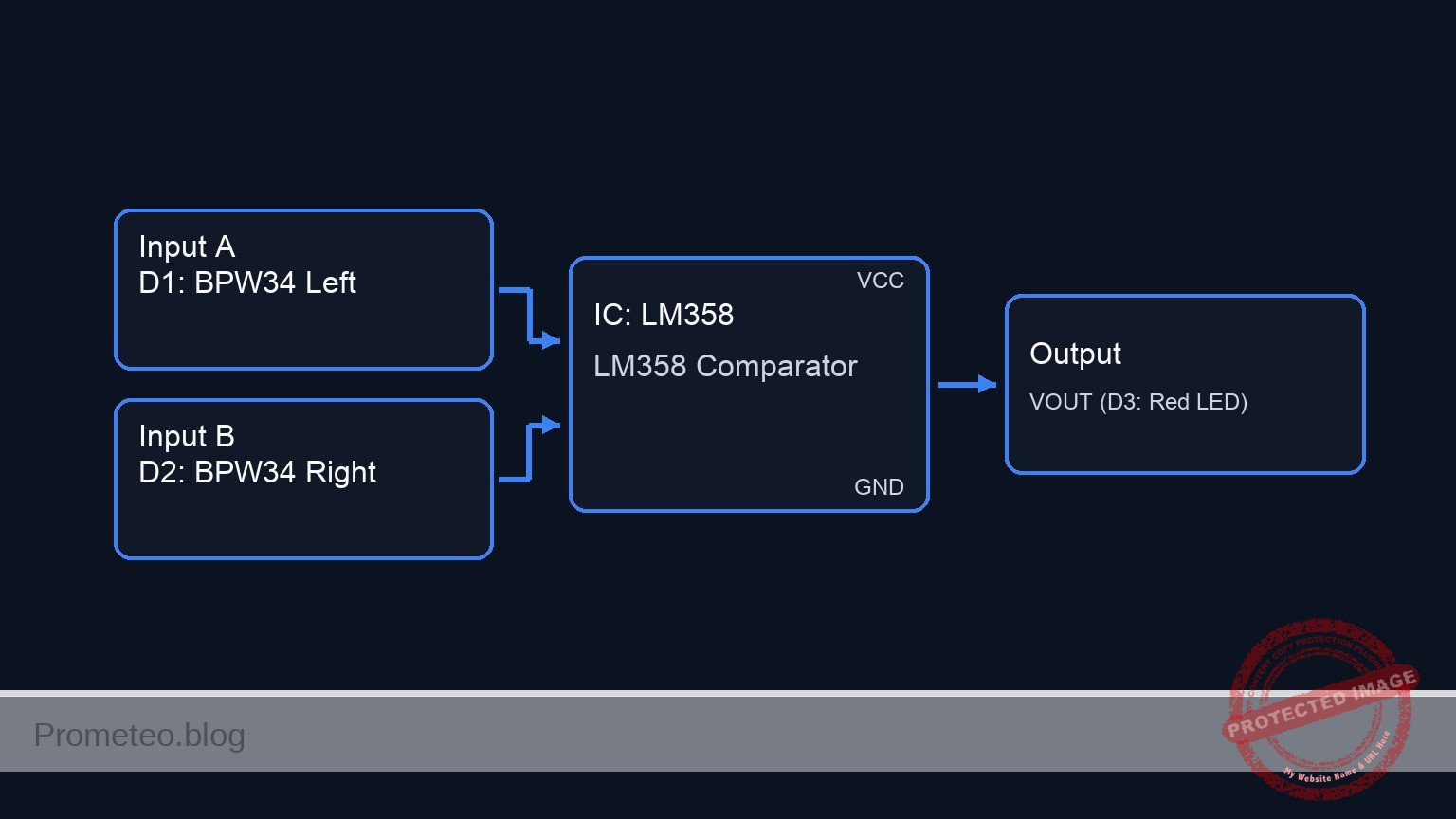
Follow me: